
Understanding Photoaging: Sun Damage and Skin Health
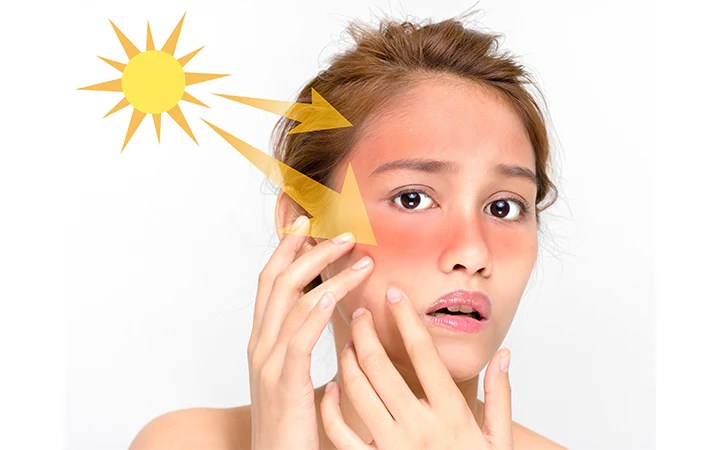
Most of us love to be outdoors. The sun not only provides us with light. Its warm rays also create “feel-good” chemicals released in our brain. Vitamin D, essential for healthy hair, skin, bones, and mood, come from the sun. However summer skin can leave us with a tight not-so-good feeling on our face.
Did you get sunburned this summer? Maybe your skin is a little darker? Did it tan?
Being aware of what damage the sun can do to our skin is the first step to healthy young-looking skin.
Our facial skin does age. It is exposed to the sun and UVA/UVB rays. Even the ultra-violet lights of the office can damage our skin. Did you know you should wear SPF makeup including lip mosturizer/SPF for work? It is surprising at what the overhead lights can do to damage our skin, and our lips.
The man below was a victim of his occupation. What do you think he did most of his life? Now he has to be diligent about his skin’s health and be on the lookout for cancer.
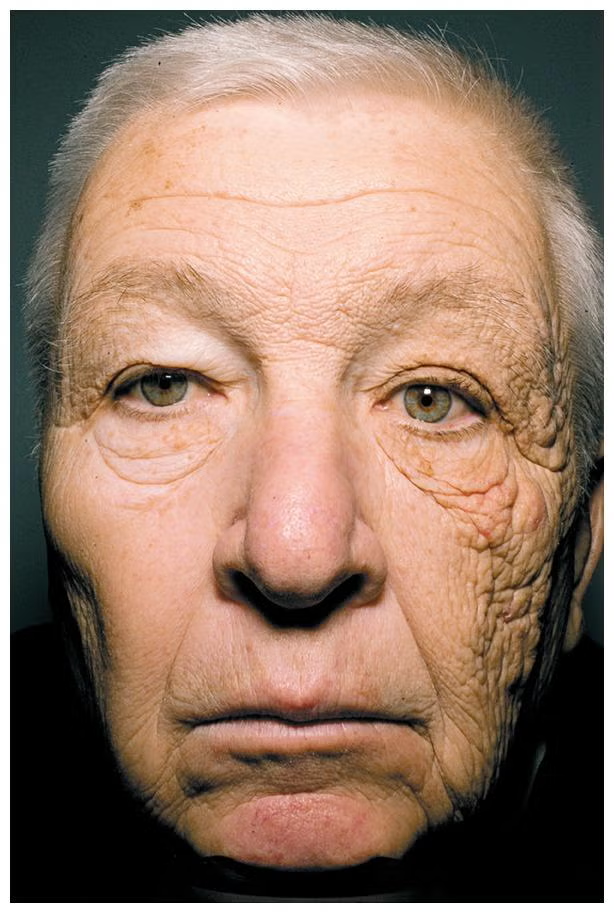
What is PhotoAging:
When the sun prematurely ages the skin, this is called photoaging. This can lead to skin cancer. Dermatologists refer to the damage the sun does to skin by several names. These include photoaging, photodamage, solar damage, or sun damage.
You will notice that the gal in the picture is not an old lady.  Sun damage happens at any age when the skin is not protected. Staying out of the sun is sure protection; but who wants that?
We all need to learn to wear a hat when we are outside in the sun. Encourage your kiddos to wear hats. Have fun with it.

Too much sun can cause Photoaging. Dermatologists refer to the damage the sun does to skin by several names. These include photoaging, photodamage, solar damage, or sun damage.
Photoaging will increase your chances of skin cancer. Don’t play with that chance. Photoaging, caused by the sun, actually changes the DNA in your skin cells. Once the damage is done, the DNA damage cannot be reversed.
It doesn’t take long for your skin to be damaged. When the damage penetrates the lower layers of your skin, it becomes more difficult to handle. It may not be curable. It may also be difficult or costly to remove.
Some topical methods that may help your facial skin. You can treat, reduce and repair the effects of fine lines and wrinkles topically. These products will also smooth out your skin, giving it a softer touch. You can improve the feel, tone, and looks of your skin.
There are moisturizing creams that can protect your skin, and can include foundation creams that contain SPF protection. These products help in refreshing and protecting your skin and work well. The trick is to find a cream that doesn’t look layered on your face. You want a natural absorbing cream.
Look for Hylauronic Acid in the ingredients. This ingredient means that your moisturizer has “staying power.” The HA will lock in moisture and help to prevent drying. Look for this ingredient in body creams also.
Signs of photoaging: it can start early in life.
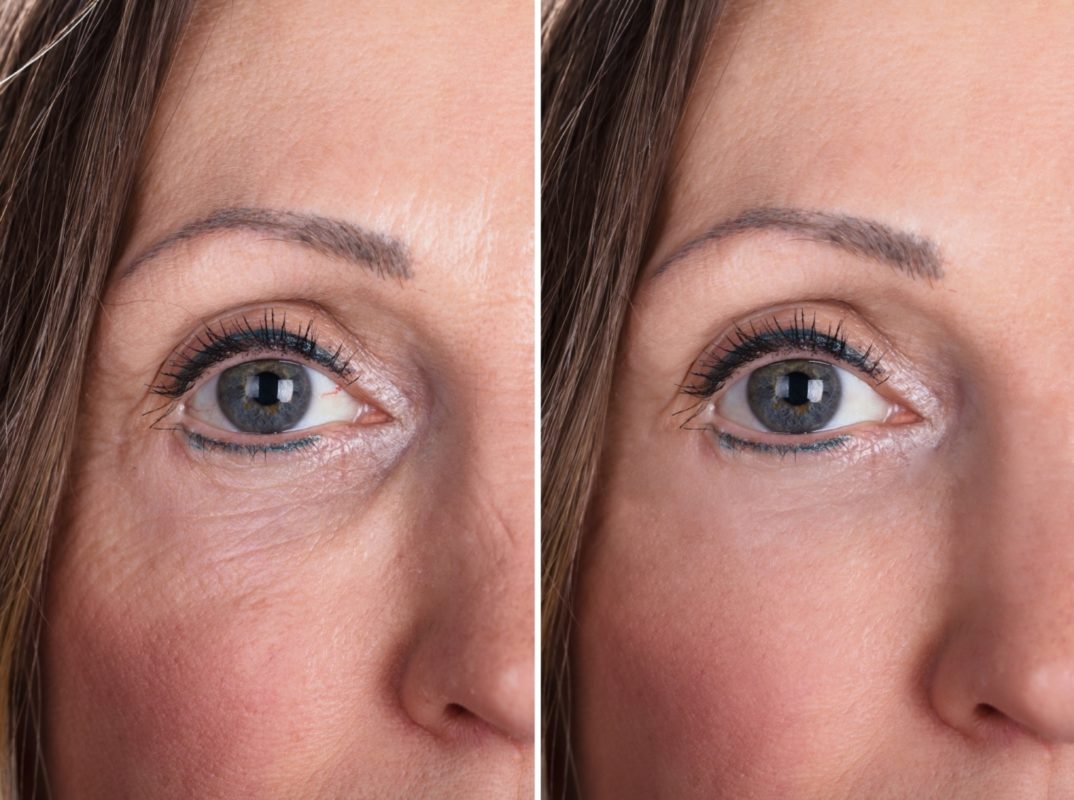
Photoaging can begin in your TWENTIES.
Signs can be: lines and wrinkles around eyes and mouth that increase in number and in depth. (Don’t forget that area of your face with sunscreen as it is often forgotten.)
Photoaging can also be worry lines on your forehead that never go away. Pigment changes, such as freckles, liver spots, age spots. White spots on your arms, legs, and back of hands (called idiopathic guttate hypomelanosis). (I have the white spots and they dry and itch. No cream will satisfy them, the damage is permanent.)
Uneven skin tone. Thinning of your skin. Lip lesions (actinic cheilitis) Red, rough scaly spots called actinic keratosis. Are you using an spf moisturizer for your lips?
These are all signs of skin damage.
Who is at risk?

Everyone really is at risk. From the time you started outside for a length of time in the sun, you are at risk. This includes now and into tomorrow if the sun shines over UV 3 rating.
However there are some people with greater susceptibility to sun damaged skin.
You are at risk if you have a light skin tone. If you have many moles. If you have freckles and burn before any tanning; this especially applies to people with red-heads and blondes. You are more apt to burn if your eyes are blue or green in color.
You are at risk if you enjoy tanning salons, and need that perfect bronzed look. During the week you are indoors, but on weekends you get intense sun exposure. Learn to use spray tans if coloring of your skin is important.
Are people of color at risk?
All skin colors are at risk of exposure to UV radiation. UV radiation exposure increases the risk of sun-damaged skin. People of color are less likely to get sun-burned because of the brown pigment, melanin, in their skin. Melanin protects the skin from some of the damaging sun’s UV rays.
If you have skin of color, you are less likely to burn. However, when it happens, your sunburn can be painful. It can also cause peeling. If this happens a lot as a young person, it increases your skin’s health risks as you age.
Oddly, there is no relationship of sun exposure and skin cancer for people of color. People of color are more likely to develop skin cancer on the palms of their hands. They may also develop it on the soles of their feet. The bad part is that this cancer is usually not detected until it is in later stages of cancer.
Health conditions that can predispose you for sun damaged skin:
You will have an increased risk of sun damage to your skin if you have an autoimmune disease. This includes Lupus erythematosus or any condition that would weaken your immune system.
Be careful if you have had an organ transplant. Be careful if you are taking any medication that can weaken your immune system. These include medications for arthritis, rheumatoid arthritis, psoriasis, inflammatory bowel disease, and cancer.
Some antibiotics will also increase your skin sensitivity. Be certain to read the prescription information when you are on an antibiotic. Ask your pharmacist for advice.
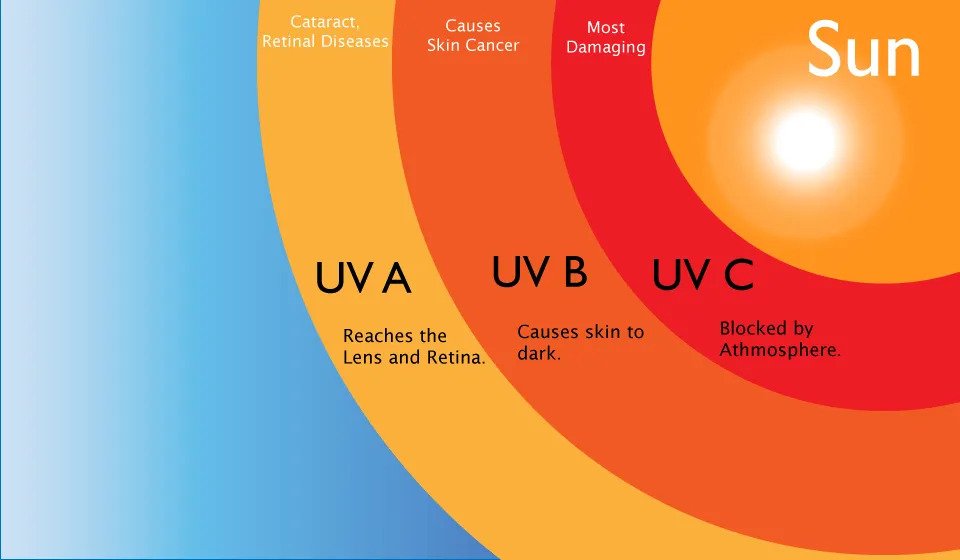
UVA and UVB light rays: the responsible rays for damage.
We’ve talked so much of UV and UVB rays. What are they?
The sun actually emits three different kinds of ultra-violet rays. Long wavelength UVA or UV, medium wavelength UVB, and short-wavelength UVC. The shorter the ray, the stronger the light.
Interesting that the UVC radiation, that can kill humans instantly ,is absorbed by our atmosphere and never reaches earth. What comes to mind is the talk of the depletion of the ozone layer from environmental pollution. More UVA and UVB rays can get to earth. All of that can result in more aggressive skin damage for humans.
UVA rays: penetrate into the deeper layers of our skin and are responsible for the immediate look of tanning. UVA rays are a great threat as much of these rays are able to reach earth’s surface. They are present all day long, even when it is cloudy. Where there is light: there is UVA rays capable of damaging your skin.
UVA Light penetrates all levels of your skin to the deepest layer. UV light is linked to wrinkles, and probably plays a role in skin cancer.
UVB rays: are the ones that mother warned you about: you can get a bad sunburn from them. These also can cause cancer which is the skin cancers that are in the top layers of your skin. UVB rays are often referred to as the “burning rays.”
UVC rays: are very dangerous, but the ozone layer protects us. We need to be conscious of environment pollution and take care of this protective layer for earth.
What can I do if I have sun-damaged skin?
If you skin is damaged from cumulative sun exposure, treatments may be available for you. However, it is wise to talk with your doctor first. Then check with your insurance carrier before beginning any skin treatment. Many skin treatments are considered cosmetic and are not covered.
If you are noticing new or changing moles or spots that are brown, black, red, or white, please see a Dermatologist. Do this promptly. This could be the start of skin cancer.
If you have had a spot on your skin that continues to bleed: see a Dermatologist.
The Best “treatment” is to do your best to prevent it from happening. Always apply sunscreen of at least 30spf or higher to ALL exposed skin before going outside. Sunscreen is not a suit of armour. Even when applied properly, no sunscreen provides 100% protection against UV radiation. (Remember to apply when the UV rays are above 3.)
If you are very self-conscious of the damage: please see a Dermatologist.
How to reduce premature aging of the skin?
Don’t smoke. If you smoke: Quit. Another great reason to never smoke.
Eat healthy foods: a diet high in fruits and vegetables.

Drink less alcohol. The sugars of alcohol can damage your skin.
Exercise increases circulation and boosts your immunity, which improves the quality of your skin.
Get adequate sleep. 7s-9 hours a night. Give your body time to repair itself.
Gently wash your skin. Scrubbing can irritate. Wash your face daily. Exfoliate only once a week. Wash sweat off your skin as soon as possible. Perspiration can irritate your skin.
Apply a moisturizer every day. Apply within 3 minutes of bathing to lock in moisture. Look for moisturizers that keep skin hydrated and create a natural barrier to help seal in moisture. Hylauronic Acid is a great ingredient to help lock in moisture.
Management and Treatment: when you need help.
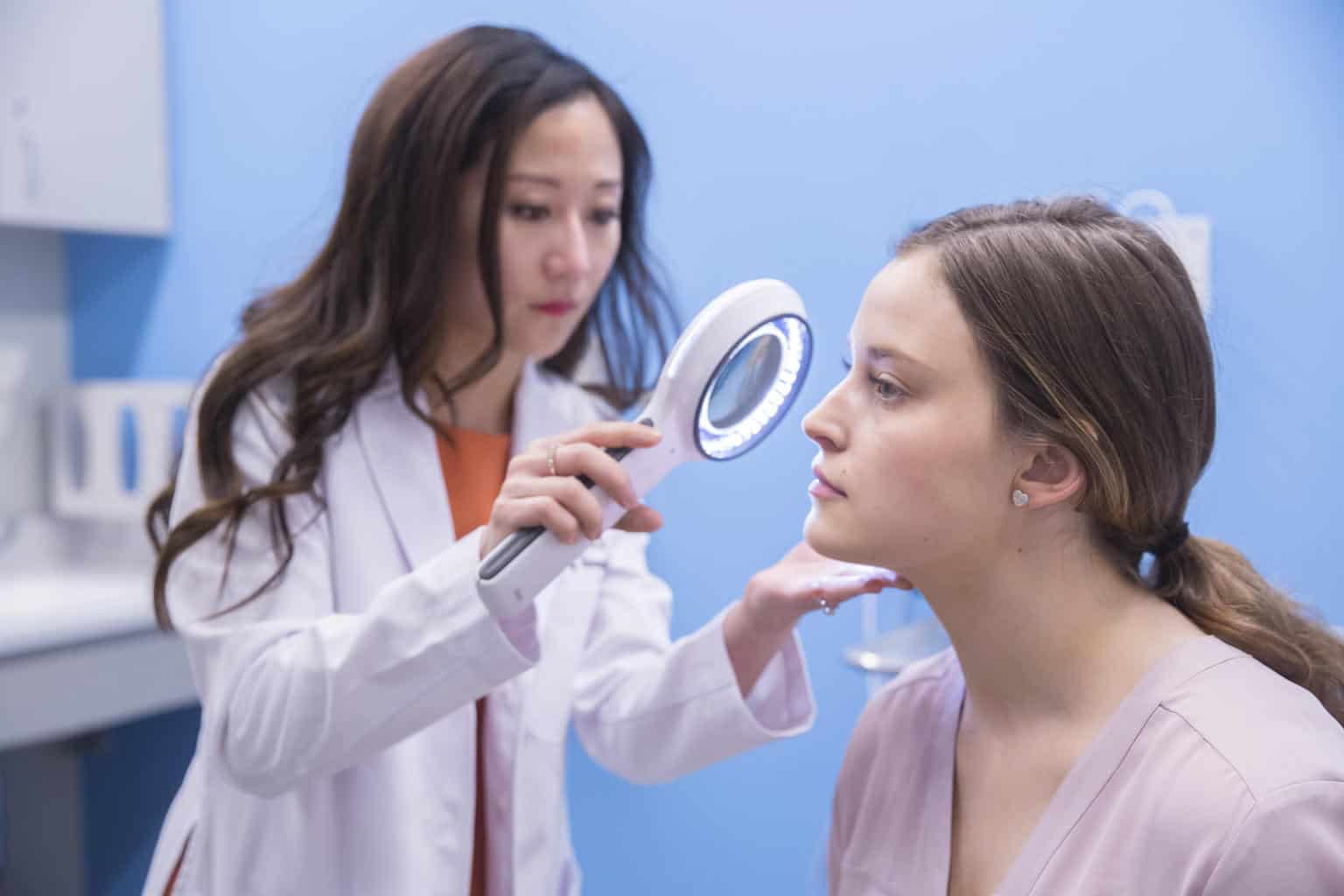
Photoaging cannot be completely reversed but some treatments are available that can rejuvenate your skin. First if you suspect a problem, don’t hesitate to have your doctor check it out.
Age spots are caused by overactive pigment cells. Ultraviolet (UV) light speeds up the production of melanin, a natural pigment that gives skin its color. This is manifested as age spots on skin that has had years of sun exposure. This happens when melanin becomes clumped or is produced in high concentrations.
Possible treatments: Retinoids and retinols: These encourage skin cells to slough off. This allows new skin cells to come to the surface. They stimulate collagen production, which keeps your skin tighter. These products are good for fine lines, wrinkles, age spots, and for reducing roughness and the size of pores. Be careful as these products can also be drying to your skin’s surface.
Vitamin C and other antioxidants: These nutrients slow skin damage due to rough chemicals. The damage is from free radicals which can cause skin damage. Antioxidants can also slow skin aging, lessen UV radiation damage, and decrease the breakdown of collagen.
Eating a good diet, eliminating fast foods, is a good start. Incorporate vegetables and fruits in your diet. Add good fish more often.
Alpha hydroxy acid: an exfoliant, which promotes skin cell turnover. This also can be quite drying to your skin. Be careful with exfoliants. They should really only be used once a week. Consult with a dermatologist.
Lightening agents: can lighten blemishes, sunspots and uneven pigmentation. Be careful of these over-the-counter treatments. Watch out for the ingredient: hydroquinone. This drug ingredient has not been approved nor recognized as safe and effective.
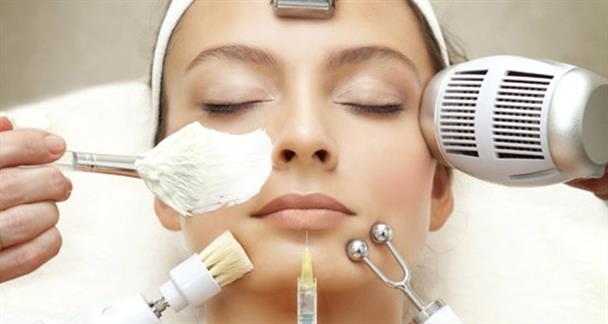
Laser skin resurfacing: These treatments remove the top layer of your skin. They increase collagen production, making your skin smoother and more even looking in appearance. Laser skin resurfacing treats uneven skin pigmentation, age spots, sun-damaged skin, fine line and wrinkles and more. Check with your insurance for coverage as this may be seen as cosmetic and not covered.
There is also Fractional resurfacing, photodynamic therapy, cryotherapy , Dermabrasion, Dermal fillers.
The laser treatment cannot be seen with the naked eye. It targets only a fraction of the skin’s surface area during each treatment session by design. It leaves the remaining microscopically untreated skin to help rapidly heal the treated areas. These treatments only last 3-5 years before another treatment is needed.
You might want to look into the above treatments if you have significant skin damage. I don’t know if these treatments are covered by insurance.
Last: a Facelift, (rhytidectomy) neck lift, brow lift, or other plastic surgery procedures. Treatments can be painful, sore, and expensive.
Prevention: Start early and continue throughout your life.

Start young. Teach your kiddos how to take care of their skin. Skin care should be taught along with tooth-brushing. When habits start young, they become ingrained and last a lifetime.
Apply and ReApply Sunscreen every two hours if you are in the sun swimming, exercising, playing ball, driving your vehicle. Even outdoors on a cloudy day.
Learn to wear a wide-brim hat. Use sunglasses with UV protections.
Don’t be afraid to wear lightweight long-sleeved shirts and pants when in prolong sun outside. Look for clothing with ultraviolet protection factor label for extra protection. There are clothing lines available with good skin protection that can be worn in the heat of the summer.
Or:
Avoid peak UV hours in the sun: 10:00 am to 4:00 p.m
Avoid all kinds of tanning salons. If you want a tanned look, use a spray-on tanning product.

Advice:
Create a new habit: Use sunscreen and reapply every 2 hours when in the sun. Learn to wear a hat when outside.
Teach your family how to take care of their skin from childhood on. Buy them a good looking hat with a large brim!
And have fun in the sun with proper protection!
Hugs.
https://wellnessmaryjessen.com
References:
https://my.clevelandclinic.org/health/diseases/5240-sun-damage-protecting-yourself
https://www.mayoclinic.org/diseases-conditions/age-spots/symptoms-causes/syc-20355859
 Mary Jessen: Wellness Makes Cents