Enjoying the good things in life!

Posts tagged ‘#health’

Avoid Hitting the Wall: Essential Tips for Strenuous Activity

If you are an active person, you probably know what this means.

I did such yesterday.

I forgot my age. Yes, that can be a factor too.

I overdid it Big Time.

I hit the wall. And could go no further.

What does “hit the wall” mean?

In endurance sports or long term hard exercise, “hitting the wall” or the “bonk” is a condition of overwhelming fatigue and loss of energy.

I was working hard cleaning in the yard. I was lifting, tugging, throwing, and moving items. The temps were actually nice. But I did not realize the amount of energy I was using.

I’m not a big breakfast eater. I did eat my toast and drank my Energizing Tea and Life Shake. But it wasn’t enough. What we “normally” eat for breakfast or lunch is usually below what is required for heavy exercise. Toast and a Life Shake is good for staying inside and doing the “usual stuff.”

(Energizing Tea does contain 70 mg of caffeine, but don’t rely on caffeine as your engine starter. The fuel is in the carbs.)

My breakfast was not what was needed for the strenuous exercise I was going to do that morning.

Before any strenuous exercise, and that can include cleaning out a locker in the yard, take time to eat a carbohydrate rich breakfast. Obviously one piece of toast it not enough, even adding the carbs of the Life Shake. I wasn’t looking at carbs. I was thinking protein.

But protein is not the fuel needed when there is work to do.

What happens when you “bonk” or “hit the wall” is that you have used up your first response glycogen stores in your body. You also are probably a bit dehydrated. (Remember it doesn’t take much to be dehydrated. I was too busy to drink!)

For women it is 9 cups of fluid over a day; for men it is 13 cups of fluid a day.

Now if you are starting out in the morning with your huge strenuous task, remember you are a deficit to start with from the overnight fast. You can see how quickly you can become dehydrated when exerting strenuous exercise. Your body fluid is down. What are you adding to start the day? More than a cup of caffeine??

Add some heat of the sun, and you are a great example of what dehydration can be.

What is glycogen?

“Glycogen is a form of glucose, a main source of energy that your body stores primarily in your liver and muscles. Your body needs carbohydrates from the food you eat to form glucose and then glycogen.”1

Choose good carbs to store; you know what kind. Oats, Rye, Steel cut oats, beans and whole grain rice, whole wheat breads, apples, berries, potatoes, sweet potatoes. Use some of last night’s carbs to start with a good breakfast: rice and beans and eggs? Potatoes, beans and eggs. Maybe a bit of cheese to garnish. Add an apple to much on the side.

Glucose is from carbohydrates (a macronutrient) in certain foods. Good carbs such as oats, (sorry Cheerios’ oats do not count as way too much sugar and low on good carbs. No wonder kids can’t sit still in school?)

When your body doesn’t need the stored glucose for immediate energy, it stores it in your muscles and liver. It puts this stored glucose into storage. (like the stored carbs from last night’s supper.) And we know how hard it can be sometimes to get things out of storage!

Your body creates glycogen from glucose in those good whole carbs in process called glycogenesis.

For an untrained individual, like myself as I was not thinking endurance activity, an average diet is able to store daily about 380 grams of glycogen in the body. This total amount is spread out throughout the muscular system and is not readily available. This is talking a whole day’s worth of glycogen.

When glycogen stores are not replenished during the exercise, your available energy storage is quickly depleted and in less than 2 hours of intense exercise. (I wanted to get it done!)

Glycogen is needed for any strenuous work and it doesn’t have to be special work; it could be your job as we know there are many jobs that require a whole lot of muscular effort.

Suddenly I was intensely tired and could do no more.

I had to stop. I could hardly walk into the house. Boy was I tired! Almost weary.

I drank a Shaklee’s Hydration product. It wasn’t enough. I was too dehydrated for instant results.

I then thought of a Recovery drink that is higher in carbs, sugars, and sodium. (I chose Shaklee’s Build+) I added this to my next drink, with more Hydration product.2

But I was sooo tired. I needed to lay down.

In about 30 minutes, I did feel better and was back on my feet. I was amazed at how different I felt. No longer tired.

I had never noticed the HUGE difference when you give your body what it needs at that moment! It was a lesson learned and to be shared.

What is this lesson?

For one, don’t try to be Superwoman or Superman. Learn to cut down big jobs into sections or days if needed. When you are on the job, look at what needs to be done. Break it up into sections that will allow you time to hydrate and replenish. Work with the weather if you can. (This can mean heavy work when the temps are cooler and not at mid-day.)
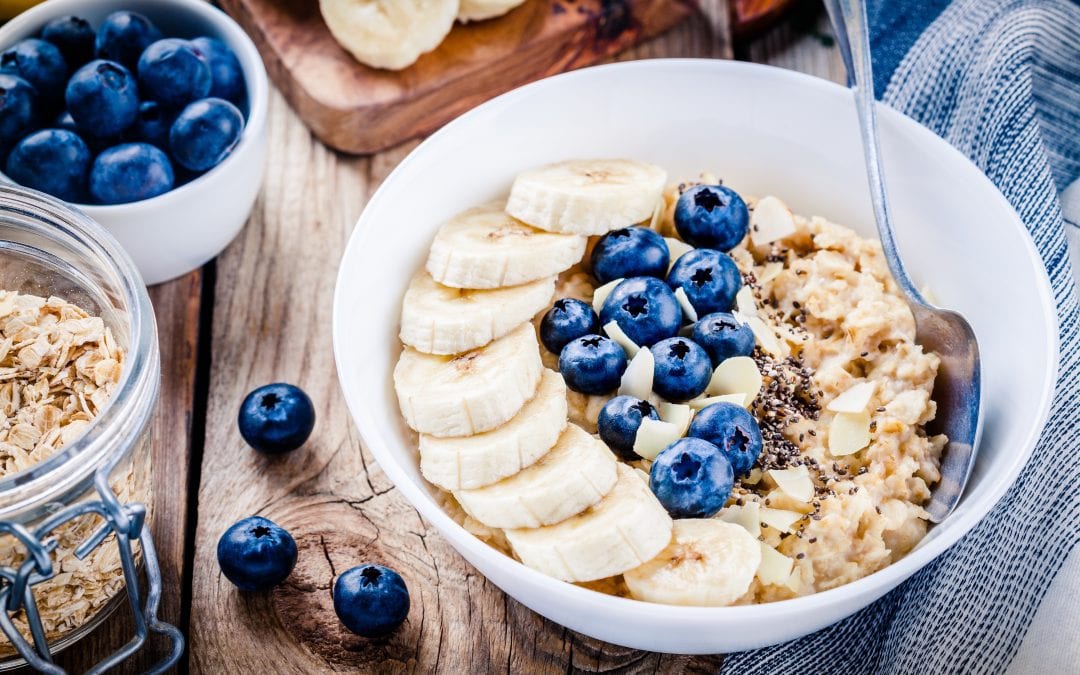
Two: Eat a good breakfast: even if I’m only trying to get yard work done in a short amount of time. (working against the heat of the day.) I suggest Oatmeal with fruits. High carb and good sugars. Drink a good amount of a good Hydration product. (I’m not talking Gatorade here.) Be careful as to quantity as you don’t want to swish those liquids when bending and stretching. You technically should drink your fluids one hour before exercise.

Three: Prep and have a hydration drink available to sip while you are working or exercising. Keeping hydration up does make a difference. Yes, this means that not only do you need a rake, or shovel, or trowel, or whatever equipment needed for the project, you also should prep a good hydration drink to have close by.

Four: Water is not your friend when you are working. Fluid levels are affected by many things. And water does not have the needed electrolytes you are expending.

Sports drinks are not your friend when you are dehydrated as many are too high in sugars and low in needed electrolytes.

Five: Pace yourself. Rome wasn’t conquered in a day. (If you are an endurance athlete, you need an different set of rules to reach your goal.) I’m talking to the average person who sets out to accomplish “great things.”

If you are running to get in shape for an upcoming race, let’s chat! There are different rules for fluids and foods when you are in competition.

Six: And most of all take time to recover. I’m not talking a nap on the couch. Yes, I laid down AFTER I had my Recovery Build+ drink and Hydration drink. (I am an older woman!) Recovery time is important!

I added a Recovery Supplement at bedtime. This one is an all natural anti-inflammatory and pain relief. Choose wisely to be able to sleep well without pain.

Recovery is important to your body.
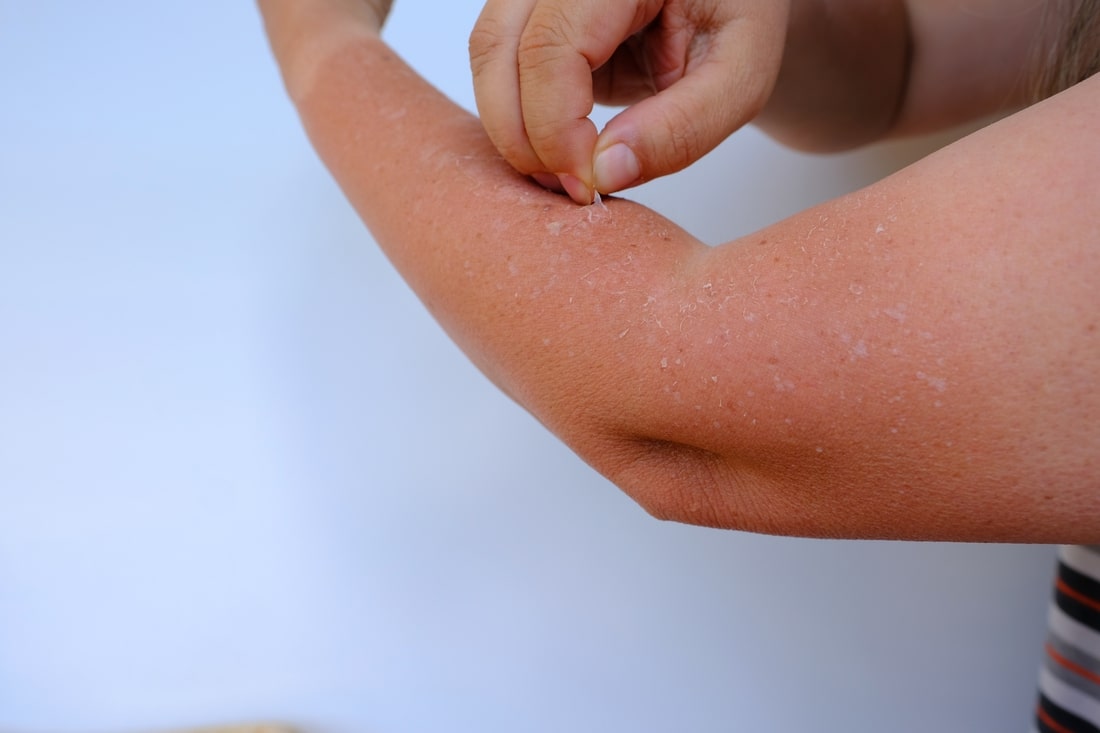
Have you ever noticed that after a day in the sun, or a sweaty workout, your skin feels a bit gritty? That grit is actually the salts that have left your body along with the water when you sweat.

Hydration before the shower! Running water over your skin does not hydrate your skin. Stay hydrated through the exercise and you won’t notice the dry skin.

What to eat? Celery, cottage cheese help with fluid retention. Bananas are good for potassium. Nuts, seeds and dark green leafy greens are good for your tired muscles.

Calcium helps with muscle contraction and is a good liquid for the Recovery drink. Soy, coconut water, milk (now you know why the Indy drivers drink milk after a race), iced tea and a good Hydration product. Pedialyte is good. 3

With a child athlete: pack a banana, nuts, orange slices. Add a good hydration drink, not just a bottle of water.

Recovery foods are important to help with the healing of the muscles used during the strenuous exercise. (You do want to go back out tomorrow and finish the job?)
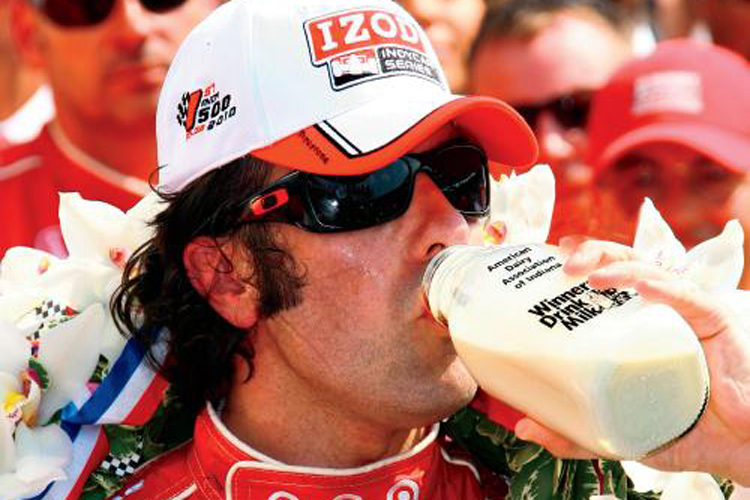
Indy 500 winner drinking milk

Be choosy. No fast foods. No hot dogs or burgers. No fries. No popcorn as that kind of salt is really too much.

A good salad will be a good start. And maybe a glass of milk! We talked what to pack.

And get a good night’s sleep.

Next time: Plan ahead!

https://wellness.maryjessen.com/home

  1. https://my.clevelandclinic.org/health/articles/23509-glycogen ↩︎
  2. https://us.shaklee.com/en_US/jessen/Nutrition/Fitness-%26-Exercise/Pre-%26-Post-Workout/c/24000 ↩︎
  3. https://www.nutritionnews.abbott/healthy-living/diet-wellness/thirsty-common-hydration-mistakes-you-may-be-making/#:~:text=In% ↩︎

Embrace New Year Resolutions with Positivity

How did you start the year?

What did you do after the balloons and noise-makers and champagne were gone? Did you make a list of New Year Resolutions? Was this list a long one or a short one?

I have never really written down a list for the New Year “to do.” I don’t know if maybe I am afraid of seeing what I do not achieve throughout the upcoming year.

Lately, I have come to the conclusion that new year’s resolutions need not be big steps. Instead, they can be small positive actions or just creating a new habit. (I also don’t assess a number of times: 3x a week for arm-curls. Instead it should be: exercise weekly, as weekly can become more often as the year goes by. )

A time of reflection:

January 1 can be a day of reflection on the good things of 2024.

But it doesn’t have to be the FIRST of the year. It can be at any time in the beginning of 2025.

Reflecting on the past year can be beneficial. It helps us consider how to improve ourselves and our way of life.

“We spend January 1 walking through our lives, room by room, drawing up a list of work to be done, cracks to be patched,” wrote Ellen Goodman.

Why do we feel we need to make a New Year resolution?

Google reflects: “A probable reason for (making) the New Year’s inspiring resolutions is the extra motivation many people feel around the end of the year.” We feel we want to start fresh and maybe make the new year better.

The start of a new year is a great benchmark.

The beginning months of the year allow us to look back. They make us think about where we stand right now in life. It helps us get clarity on what could be done better. With reflection, we can then create better habits for the year ahead.

Beginning the new year with resolutions does not have to be a dreadful list of tasks not completed.

I’ve realized I prefer creating a New Year’s list of what “I want to do in 2025.” This is more appealing than a list of tasks to accomplish. (Just a different approach.) I also think it is a more positive approach.

Do you create a list of changes for the new year?

A mental review of the ups and days of fun of the past year is a good way to think.

Are you remembering the highs, the good times of the year?

Make a list of the good times that improved your life and you want to repeat.

Have you found that you seem to abandon the “resolution” list by the 30 to 45-day mark?

Was your resolution list too much or too hard?

Were you critical of yourself?

Maybe there were too many items on your list?

New Year resolutions should be a list of what can be fun to do in the new year. It should include an easy way to create a new habit.

“Tomorrow is the first blank page of a 365-page book. Write a good one!” advises Brad Paisley.

I like this idea. It also plays into creating a journal for the upcoming year. I like the idea of creating a journal of positivism. This make it easier to write. The journal becomes fun to create. (I will talk more of this later.)

Creating a list of resolutions can be quite intimidating!

Mark Twain says: “Continuous improvement is better than delayed perfection.”

Continuous improvement sounds hopeful as it does not have an end. Continuous improvement is not self-critical. It is an rewarding motion.

This quote has led me to create a list of what I want to improve or do more of. Positive thoughts and actions.

Don’t start by looking at the reflection of yourself in a mirror:

Looking at yourself in the mirror is not always the way to start the year. Many times we tend to be quite self-critical.

You want to look around at your physical surroundings first.

We can start by looking at our immediate surroundings and decide what needs improvement. Improvement means a commitment of time. Maybe forgoing a vacation this year to improve your home or yard?

Do you have a resolution for the inside of your home?

Organization is always good for the mind. It gives our brain strength. Your brain loves organization.

Organization of your home does not have to be a BIG job.

As you look around are you satisfied with the organization of your home base? Does the inside of your home need improvement? Don’t look at the whole house. Look at your “living” rooms. Look at the rooms YOU are in the most. (Kids rooms don’t count! maybe next year?)

Does the inside of your home need a straightening or an organizing?

Sometimes just organizing the physical things around you can help make you feel good. Having an organized spot is better for you than being surrounded by what is not allowing you to feel “all-together.”

You can start with your cupboards in your kitchen. Are they full of good foods? Nutritious foods? Are you eating healthy? Don’t throw food out; donate it. Make a list of what you can improve. Maybe more fruits and vegetables. Less snacks?

What is your food budget? Are you wanting to save money this year?

A change in your eating habits could help save money. Good foods do not cost as much as snacks or pop.

Good foods also give your greater satisfaction after eating. Good foods do make a difference in how we physically and mentally “feel.”

How to start the day organized:

You have changed or organized your foods and your cupboards, what is next?

It is advised to start each day with making your bed!

This simple action of making your bed lets your brain start the day organized. It helps throughout the craziness of the day. Try it? Your bed doesn’t have to look like out of “Good Housekeeping.” All it means is to straighten the sheets and blankets and fluff your pillow. Simple. Easy and not a big project. Your brain loves the act.

What is the meaning of the hated word “diet?”

Are you concerned about your weight?

Don’t think the word”diet” as a negative.

Merriam Webster defines the word: 1. a the food and drink that a person, animal, or group usually (takes many birds live on a diet of insects). b: the kind and amount of food selected for a person or animal for a special reason (as improving health) or consuming each day. c: a plan of eating and drinking less than usual (so as to reduce one’s weight) 2 something experienced repeatedly( such as more fruits and vegetables)

“Diet” is a word that is meant to be a note of what you eat each day. The word “diet” does not mean what foods you have to give up to meet a society marker of what to eat or weigh. (I’m not going into weight. Sometimes just changing what you are eating can accomplish this.)

We all eat differently. There is a way to eat healthy, and not focusing on the elimination of your favorite foods. I encourage you to think of adding color and texture to your foods. I want to think of replacement or addition.

Diet really can mean something experienced repeatedly Each Day!

Make a resolution to create a “diet” of your favorite fruits, and include new vegetables.

You notice that the word “diet” is basically what we eat each day.

A New Year’s resolution can be adding to your diet! Adding is a positive resolution, and one that can be easier to continue.

Winter has many different fruits and vegetables!

By adding more raw fruits and vegetables, you move the ugly calories aside.

Years ago, when I worked at an Assisted Living facility, I decided to gather different fruits from the grocery stores. I purchased fruits that were not on the daily menus. I wanted to offer different tastes and colors.

This activity was a HUGE success. We tried Jack fruit! We tried different bananas. We tried mangoes. All fruits that were not part of a daily menu. And worth of a note in your journal. And perhaps becoming a substitute for the usual bag of apples?

So don’t let the word “diet” in your new year resolution to be an ugly word.

Use the word to be a sweeter way of adding more fresh fruits and vegetables. (Your body will love you!)

Make plans for getting outside of your house:

Consider creating a resolution to get out of the house more and into your local, state, or national parks.

Make plans to visit each of the parks in your city. That can be a fun number to achieve!

Try to spend four hours at each park. (Don’t tell yourself, it really is about adding exercise.) Your local parks may have some great programs to visit or partake.

Recently I became a Indiana Master Naturalist. This is a program offered by the Parks Department in Indiana. (..maybe your state has one too!) We hold a spring “Hawks” program and a fall “Owl” program in a local park. It is a great success! And a lot of fun. Families here Love it! You might look into your local parks for such-type programs.

Make plans to enjoy the outdoors.

Plan a picnic, even in the winter! A walk with a stop of hot cocoa at the end, and don’t forget the marshmallows!

Select a hike that the park department may offer. Use the bike/walking trails in your neighborhood. Or maybe just the sidewalks!

Find a park program and reserve a spot! This is all the fun part of a new year resolution.

Gratitude and enjoyment is a positive resolution.

Did you look back through last year and feel some gratitude that you went, or saw, or enjoyed something special? Gratitude is a great way to make the day easier. (Don’t count “just getting through the year! There has to be some fun in it?)

Consider starting a journal of the fun things you do each week.

(Remember the park hikes? Remember choosing a raw fruit or vegetable? All some fun things to do and are worthy of a journal note.) Indirectly this becomes a Gratitude Journal. I’m betting you have heard about a gratitude journal?

Sometimes the thought of writing a gratitude journal can be daunting.

But writing in a journal becomes easier if you list what was good and fun that day. You can even reflect and remember the entire week.

We went on vacation this past season. I decided to write a short journal about our activities, sights, and meals. It started me thinking that a gratitude journal need not be an itemized list of what I’m grateful for. It can be created by indirectly listing what was good that day. I can write that!

Suggestion: create a day of the month to try something different to eat or an activity. Make a note of this activity in your journal.

Remember a journal is just taking notes of what was fun and good to remember!

How to start a journal? On a specific day, let each family member will get to choose what they want to try. Get the family involved. Do this at a family meal. (What no family meal? Create one!) It is easier to do different “things” when it is a family action. And then make a note of it in a a journal.

Can a resolution can also be creating a new fun habit?

A new year’s resolution is just creating a habit you want to do throughout the year: a new “diet.”

Remember the word “diet” can be a new habit. It can also be developing a habit farther. It should be an enjoyable new habit!

What type of habits am I suggesting?

If you like to read, maybe adding more non-fiction to your list of books. This can include book of education. Education for the job ahead. Education for advancement in your career. Education for the new hobby. For me, a bird book! Or it could be just changing what you eat.

Germany Kent advises: “Never underestimate the power you have to take your life into a new direction.”

Don’t feel intimidated by a resolution:

New Year Resolutions do not have to be intimidating. Just think about last year and decide what you want different in the New Year.

Don’t make a list of what went wrong last year. Just think of what you want to do better or more often.

You can add a weekly trip to a park.

Try new fruits and vegetables.

Make notes of what was fun and yummy! Make a list of what to do for 2025.

“The best way to predict the future is to create it!” Peter Drucker

365 ways/days to improve oneself to the fullest.

Make each day or week fun and worthwhile.

Step into 2025 with purpose and positive vibes! Start the new year with a list of fun for the future.

When we create positive new actions, we are creating great New Year Resolutions/”diets”!

With some planning I know you can create a better and fun new year!

\Do you want to take a trip in 2025? Trips don’t have to be expensive.

(The trip can be to site see in your nearby city.Many suburbanites have never been to the local big city.)

Are you thinking a trip to the library? A course of study? (This is where a class might be fun. I took the Indiana Master Naturalist class two years ago. It has a requirement/encouragment of activities that need to be done each year. It gets me out of the house/routine.)

(I have another resolution: I want to finish my Nutrition Coach classes. This is a good online class that I can finish this winter when I’m indoors more.)

A recipe? Do you like to cook or bake? My daughter found cooking classes at a local home goods store!

A trip to the museum? (Every town has some type of museum.) Don’t forget your local parks and even libraries. (Libraries also have book clubs whereas you read the book and once a month, gather to discuss it!)

A new hobby? Do you like to sew? Perhaps paint? There are clubs to teach and share.

Or a new organization to join? Volunteer work? (Volunteer work is needed today. Young families are so busy. But joining a volunteer group also teaches our kiddos that helping others is important.)

All of the above steps of improvement are fun and create new habits (“diets”) for the new year.

Remember a resolution is just creating a new habit.

If You followed the above suggestions, do you realize you created a New Year’s resolution plan?

Wow! A great New Year resolution plan!

And you created this list by thinking of positive actions for you and your family!

Organizing your home (and maybe improving it);

Improving how you eat;

Adding more exercise;

Improving yours and your family’s health;

Looking into a new hobby;

perhaps Planning a local trip;

Developing and writing a journal;

and adding Enrichment to yourself and your family!

Do share what are the most important actions you want to do in 2025. You can be inspiring to others.

https://wellness.maryjessen.com/

https://blog.maryjessen.com/

Discover the Power of Hugs: Stress Reduction and Emotional Well-being

I’m a hugger. I have always been. Some days I crave a hug. (Is it stress that is motivating me?)

Do you like hugs or do you shy away from them?

I always ask before I hug someone new. My friends know that I’m a hugger. I think sometimes they wait for it. I many times end my notes with a hug, even if it is online. And I mean to send the thought of caring to the recipient.

Have you ever had a very bad day and just want a hug? You know how that feels. Kind of warms your heart and gives you courage to go on.

I do ask when I hug a stranger, but I’ve never been refused! I ask before I hug someone I barely know, but I’ve never been refused. Always, always ask.

Why does it matter that I have to ASK before I hug?

A hug can be an invasion of private space. We are in a society that values space.

Look at a movie theatre. Look at the distances between seating when the theatre is not full. We choose to sit apart. We value space. Now I’m not talking sitting next to chatty people, I’m just making a point. The farther apart we can sit, the happier we are. We like our space.

Do you choose to eat outside when you go to a restaurant? Now I know that the heat of summer or the cold of winter plays into this decision. But have you notice greater commadrie among those outside? Inside the tables are scattered. When we choose to sit inside, it is off to the side by ourselves. I have asked the waitress to move her choice.

Do you clap or sing “Happy Birthday?” This is a group hug for the recipient. Are you part of it?

I know of a friend of my daughter’s who is not a hugger. He really struggles with touch. I asked, he agreed to a hug. Now I think he kind of looks for that hug when we meet. He discovered some advantages of the hug.

What’s the big deal about a Hug?
There is just something about that embrace that says “I care.” I hope when you read it on your note, message, or email, you feel that. I’m sending” “I care!”

Why would I want a hug?


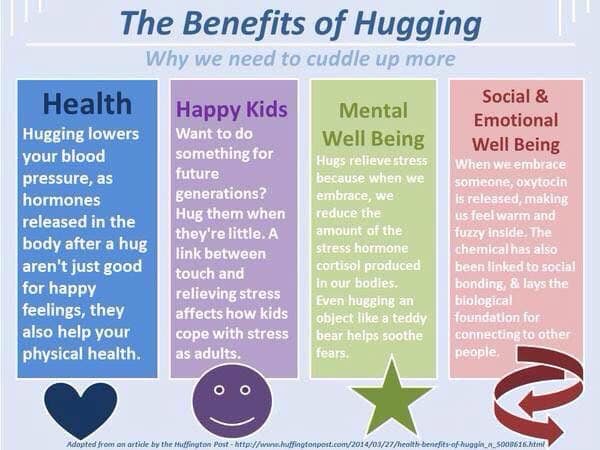
Hugs can have health benefits. We are not always aware of the benefits of it. A Hug can reduce fear, stress, and even pain. It can support your immune system and cardiovascular system with that embrace.

A hug activates the part of your brain, your parasympathetic system (vagus). This system restores energy and repairs our body. It also elevates feelings of love, compassion, and gratitude.

A hug can release the “love hormone,” Oxytocin. When you are embraced you can feel trust and attachment, even just for the moment. Ocytocin helps ease this bonding by activating the pleasure parts of your brain. This hormone is also related to happiness. This hormone is what generates “that feeling.”

There is something special about oxytocin and mothers. Women feel this effect when they cuddle their babies closely. It can literally make a mother’s heart “sing and feel warm!”

WHAT HAPPENS WHEN YOU DON’T GET HUGS?

Not receiving physical affection can be related to loneliness, depression, and stress. It can also cause physical pain and poor sleep quality. Additionally, it could result in personality disorders and attachment issues. No physical affection can also lead to trouble in “feeling” emotions in general.

That’s how important a Hug is.

What does a hug really do for my body?

Bedtime Hugs: definitely will help your brain calm down and sleep better. Feeling secure in a relationship does help you sleep calmly.

A bedtime hug for a child can be quite powerful. It sends them to sleep with the feelings of “I’m loved” and “I’m cared for.” Powerful.

Hugging a newborn child can increase the baby’s weight and improve all-over development. For a child to develop with good self-esteem, they need hugs frequently. Children need hugs more so than an adult, who already has a sense of self-esteem.

A hug from a loved one decreases cortisol, the stress hormone. Touch will disable the part of the brain that reacts to stress, and leads to a more relaxed rest.

Well-being Hugs: touch biologically reinforces the part of the brain that gives you calmness.

Serotonin is also released with a hug. This hormone elevates mood, controls anxiety, and reduces feelings of aloneness.

Hugs improve Immunity: It is understood that hugs give us perceived social support. This can lead to being sick less. The feelings of belonging is one of the tenets for good health.

The gentle pressure on your sternum with a good hug stimulates the thymus gland. This gland regulates and balances your body’s production of white blood cells. These are the cells that keep you healthier.

Studies relate to improved immunity from the reduction of the feelings of stress/tension/conflict. Non-sexual hugging is a means of conveying empathy, caring, and reassurance. Powerful feelings.

It is interesting to read that more hugs can increase salivary oxytocin. They can also lower levels of alpha amylase (3) and lower blood pressure.

The 10 second hug is actually better than the 1 second or quick hug. The longer hug goes farther.

Time does make a difference in a hug: 10-second helps the body fight infections, eases depression, and lessens tiredness. A 20-second hug reduces the harmful effects of stress. It can lower cortisol. It also relieves elevating blood pressure, and can actually help your heart.

The release of the hormone, dopamine, is what gives us that “good feeling.”

Hugs help your heart and cardiovascular system. A good hug can actually lower your blood pressure. This effect lasts even after the participant has left the room.

Interpersonal touch is linked to increased attachment security. A hug, or at the least, a pat on the shoulder, is linked to support. Touch gives higher relationship satisfaction, and eases conflict.

We know that a good hug will help with physical pain. Just the touch of knowing someone cares can make a difference. Cancer patients who received hugs of a healing-touch report less post-operative pain. A hug can also help with less use of narcotic painkillers. Amazing.

A hug can actually influence physical performance. A study with the NBA showed that teams with higher touch rates, actually performed better. That tap on the shoulder, head-bump, chest-bump (depending on sport) seems to transfer a lot of trust. This trust enhances their performance.

Childhood teams need to encourage “team-ship.” My thought is that no child should sit by themselves on the bench. A team needs to be together, even on the bench. They don’t have to touch at a young age. Just knowing someone is next to you is a big start. At a time-out, or half-time, team members need to finish with a hand-hold pat.

When someone feels a part of the bigger picture, losses are not so personal. It is not the individual that lost, it is the team. Touch eliminates that overwhelming emotion that many times leads to tears. This is also the time for the hug or the pat on the shoulder that says: I’m here. I’m proud of YOU.

Start early and your child will never feel alone.

Hugs can reduce Fighting: Couples who hug more, fight less. It is thought that a good hug blunts negative feelings. It also reduces the stress of the day.

Cortisol is a killer when left unchecked. Stress is part of our daily routines. Those who received hugs often believed they had better social support, and helped lower the stress hormone.

Snuggling with your pet works great to release your “cuddle” hormone, oxytocin. Not only does it build an attachment, but it also releases those “feel good feelings.”

A hug, according to a study, a hug can reduce the anxiety of mortality. It makes us feel safe. It makes us feel not so alone. This thought is fascinating. No one wants to die alone. Those hugs give us courage to face the unknown.

GIVE YOURSELF A HUG!

Don’t be afraid to hug yourself! Sounds silly. But putting your arms around yourself can reduce your pain. The thought is that that self-physical touch is not what your body expects. This confuses the brain as it tries to figure out where the sensation is coming from. Pain is blocked by crossing your arms.

“You play the most important role in your own wellness, and hugging yourself can help remind yourself of your power. Instead of waiting for someone to hug you and offer support, make yourself feel better and give yourself that hug. (2)

Research says: 4 a day for survival; 8 hugs a day for maintenance; and 12 hugs a day for growth. That sounds like a LOT! But when I think of a child and hugs, it makes sense to me.

Start with that morning self-hug. I think it is more powerful than the suggestion of making your bed each morning. It has been said that that making your bed gives your brain organization to start the day. You have accomplished a task. The day is not wasted. Imagine what that self-hug will do too!

That morning self-hug would go even farther. It gives you power. It gives you self-confidence. Try it! You’ll be surprised.

It is unfortunate that most people in the USA are touch-deprived. We don’t like to be touched, or we think we don’t like it. We live solitary and busy lives. This reduces social interactions, and …touch. How many people are living by themselves? Or perhaps living with people that they don’t really interact with due to schedules. This definitely breeds loneliness. Start with the Self-Hug.

ALWAYS ASK:

Our society pushes people from touch who are not directly related to them. This social norm is putting our society at a great disadvantage. We are becoming distant to our neighbors. Maybe more hugs would mean less anger. (I do strongly suggest: always, always, ASK if you can give a hug. Then it won’t be misunderstood.)

Did you stand in front of a check-out person, in a store, who obviously is having a very bad day? It can be hard to deal with the public sometimes. I ask if they want a hug? And the answer is always “yes.” I also tell them during that moment that I value their work. It is a moment of gratification for both of us. Priceless.

Notice the differences in touch among other countries:

Look at other countries. The live as communes, meaning that grandparents or siblings live together more often than solitary. Family is the support. Elders babysit. Cousins interplay with the babies. Family gatherings is a part of life. Touch is every day. They are happy with the support.

In the USA, we are content with sometimes only holiday gatherings. Why? It is much more gratifying to gather when the only talk may be who wants to play what? That’s when touch becomes deep.

The importance of human connection cannot be stressed enough. We need it.

When someone wraps their arms around you, you do feel the comfort and a feeling of not being all alone. It warms our soul.

It is no surprise that a good long hug can make us feel so good.

I’ll be sending you a hug each time we communicate! Who says a non-verbal hug doesn’t count?

Reference:

  1. https://www.verywellmind.com/the-power-of-a-hug-on-your-health-5211361

2. https://www.healthline.com/health/hugging-benefits

3. https://www.healthline.com/health/hugging-benefits

3.)The ability of alpha amylase to hydrolyze (break down) starch primarily benefits the digestive system. Additional health benefits of alpha amylase include support for the immune system. It aids in the management of inflammatory conditions. It also provides support for aging. (https://www.xtend-life.com/blogs/supplement-ingredients/amylase#)

4. NIH: Does Hugging provide stress-buffering social support? https://www.ncbi.nlm.nih.gov/pmc/articles/PMC4323947/

5. https://www.medicinenet.com/how_do_hugs_make_you_feel/article.htm