Enjoying the good things in life!

Posts tagged ‘food’

How Chocolate Is Made: A Cacao Journey from tree to Valentine!

There is something special about seeing how chocolate is grown. I never imagined it growing on a tree! How did you image cocoa in it’s natural form?

I did not imagine cocoa starting in a pod on a tree. I did not know of the health benefits of dark chocolate. Nor did I imagine it growing in a tropical forest?

On our vacation this past Fall, my husband and I saw how chocolate candy is made. We visited a home in Mexico where cocao was made into chocolate.

I was not aware of all that is involved in creating a piece of chocolate candy. I also did not know what is involved in making a packet of hot cocoa. But we sure did want to see how it was grown.

Wait: isn’t it cocoa?

First let me say it is a Cocao plant, or Cocao Tree.

What is the difference between cocoa and cacao?

The tree, pod, and bean/seed are typically referred to as “cacao.” The word “cocoa” is used to call the bean once it has been fermented, dried, and roasted.

How it all begins:

Chocolate begins with growing on the “cacao tree” (Theobroma cacao). It grows within 20° north and south of the Equator. It thrives on a mix of hot temperatures, a good amount of rain, and oddly also shade.

Cocao is grown in protective pods that form directly on the tree or branch.
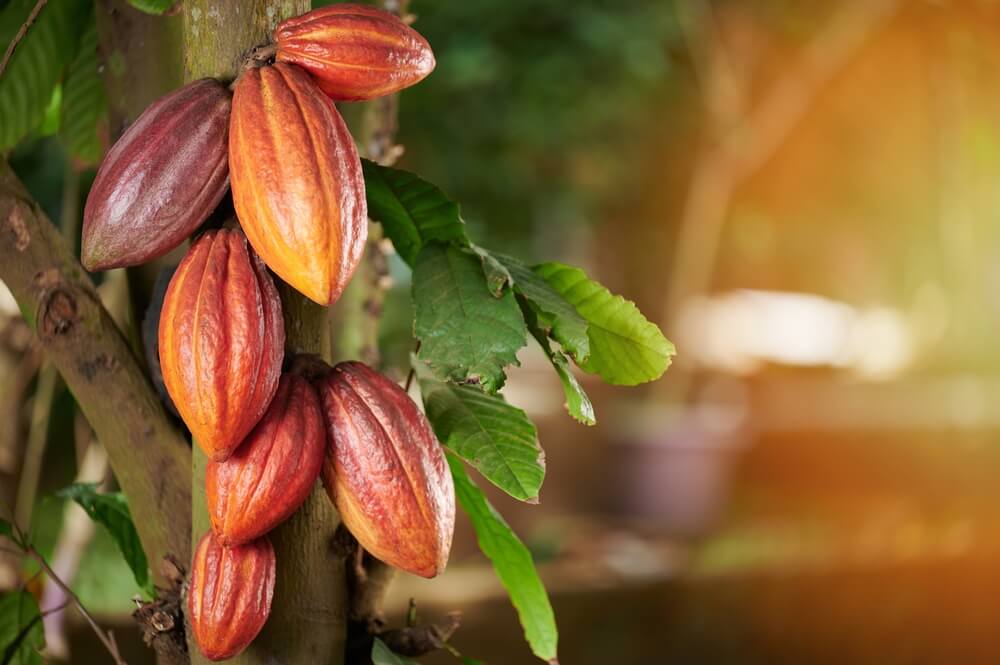
Each tree bears many pods, which are about 5–12 inches long. Each pod contains 30–50 seeds, and it’s these seeds/beans the world knows as cacao (or cocoa) beans.

(Technically what is inside the pod is a seed for the next generation.)

Cacao pods are ripe when they turn a vibrant yellow/orange color. (The pods we saw were yellow, more of pear-yellow.)

The ripening pods hang from the trunk and on the larger branches. The pods hang by small stems. They are typically harvested twice per year. However, they can be harvested continually as flowers and pods can happen at the same time.

Cocao trees grow along-side banana and other fruit trees. These other trees provide some shade and a buffer of rain water for the cocao tree. (Cocao trees need lots of rain, but evidently not direct.)

It is typical to find a Cocao tree in someone’s yard.

Harvesting:

Harvesting is done by hand with a long handled knife. Care is taken not to damage the tree or the pod when harvested.

The pod can easily be opened. Sometimes it opens by just cracking the pods together.

Another method is hitting it with a mallet or knife. (I was amazed to see a gal just knock the pods together and they opened!)

The pod opens up to a milky center where there is a “cone-like” structure that houses the chocolate beans. The beans are covered with a milky substance that is really quite sweet to eat. Bob and I did try this substance. We enjoyed the sweetness. It was kind of a cross between a kiwi and a pineapple, with just a very minor hit of cocoa.

In Latin America, this pulp is called baba. It was used to make a fermented cacao wine as early as 3,000 years ago.

Cleaning and washing:
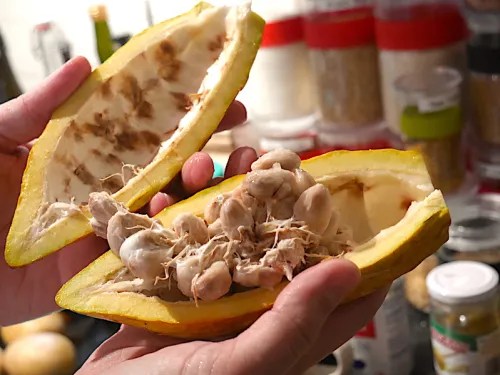
Beans are cleaned by hand, with the baba (pulp) left on to help develop flavor. Exposed to light, the cream-colored beans turn a purplish color.

The milky substance is washed off the beans, after which the beans are put out to dry. Drying is important.
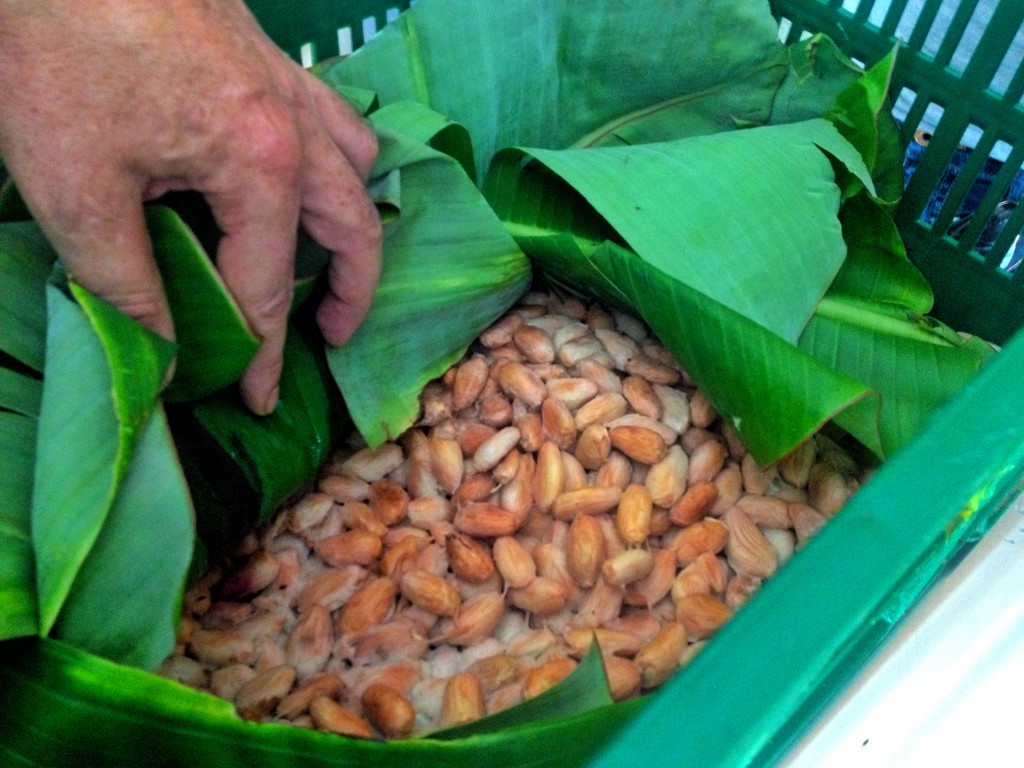
In Latin America, cocao beans are covered with banana leaves. The beans are layered in special boxes that allow ventilation.

The fermentation process lasts between 2-9 days. During this time, the beans begin to take on the dark purple color. They also develop some flavors you would recognize as “chocolate.”

The beans need to be stirred often so that all of them can be dry uniformly.

Notice they are dried in the shade. Outdoors is too much sun.

Market time:

The beans are separated as they dry. Once dried, the beans are graded, packed into sacks, bundled, and checked for quality. They are then shipped and traded on the international market.

Or, in the case of direct trade (for craft, bean-to-bar chocolates), the beans are exported directly to the chocolate maker.

Several chocolate companies source cocao beans directly from farms, including Ferrero, Lindt & Sprüngli, Askinosie, and El Rey. They then process their own way for their distinct flavors.

Processing cocao:

At home, great care is taken with the drying process. The beans must dry on a ventilated platform, out of the sun, and stirred often.
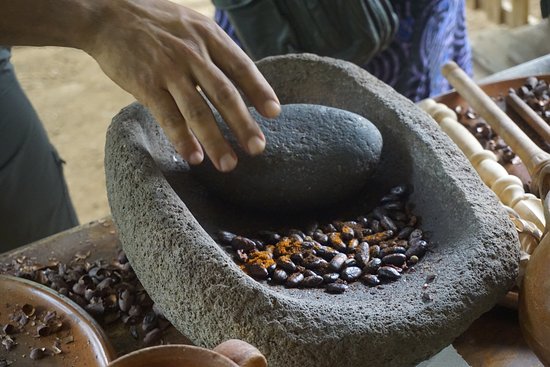
When the cocao is processed at home, after drying, the beans are rolled with a wooden pin or stone. They are crushed into a fine dust. Sugar and Cinnamon is add to this process. This home process is a lot like the manufacturing “conching” which is done by machines.

When the cocao becomes cocoa powder:

The cocao bean has become cocoa powder. With more grinding, the powder changes some more.

Crushing continues until the substance becomes almost paste-like. This is the first chocolate candy. The paste can be rolled together into a ball. And then flattened to make a slab of chocolate!

Sometimes it is just cut and packaged. After all the work: Candy is made!

But this chocolate is oh so good and different from what I would buy in the store. It is not overly sweet. It most definitely tastes of chocolate.

The chocolate that Bob and I tasted was more the raw chocolate candy. Just cocoa beans, sugar and cinnamon. (Butter may develop from all the rolling. Rolling creates a heat that slowly blends the ingredients together.)

The chocolate we can purchase in a store in the USA is much different. It is unlike the natural chocolate found in a Mexican home.

Processing at home:
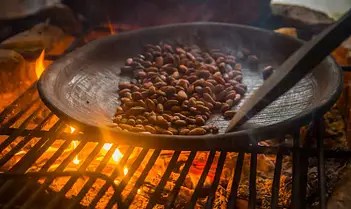
When creating chocolate at home, the beans are still need to be cleaned. They are soaked and stirred and stirred to dry. They are tended carefully.

Then the beans are roasted at low temperatures to develop flavor.

(Illustrated is an at home roasting. )

Shells are separated from the roasted beans (the “meat” of the bean) by a process called winnowing. This is where the chocolate nib is formed.

Nibs are the finely ground cocoa beans. These nibs are ground into a cocoa mass. At room temperature the grinding can result in a solid paste. (Placed under extremely high pressure, this paste yields two products: cocoa powder and cocoa butter.)

The grinding process transforms the cocao bean into cocoa powder. This can be done by hand or machine. Once ground, it is ready to add any flavorings desired.

Cocoa butter happens through more grinding, then pressing out the liquids to separate the cocoa butter from the solids. 

The chocolate we buy in the store:

The chocolate production process consists of fermentation, drying, and roasting and grinding.

Mixing of all ingredients, after grinding, is next. (This is the cocoa mass, sugar, cocoa butter, emulsifiers, aroma, and milk components if needed. This is where the individual chocolate companies develop their own flavors.)

Conching (rolling) and tempering complete manufacturing process.

Conching is a vital step in chocolate making that involves mixing, kneading, and grinding chocolate to achieve a smooth and consistent texture. Conching is usually done by machine. The chocolate becomes a very smooth paste.

In Mexican homes, conching is done by hand to create the desired powder. Homemakers add flavorings, such as sugar and cinnamon at this point.

Major chemical reactions occur during fermentation, drying, roasting of cocoa beans, and conching of the chocolate mass. These reactions are the most important for flavor and aroma development. For candy companies this process is done mechanically and under great control.

Once received by the processor, beans may be blended with other ingredients. This creates desired characteristics. Alternatively, they can be kept separate as “single-origin chocolate”.

White chocolate is made with cocoa butter, sugar, and milk powder (but no cocoa mass/liquor). Because it contains no cocoa mass, some do not consider it a true chocolate.

A top ranking superfood!

“Dark chocolate: what was once considered a sweet treat, is now considered one of the top-ranking superfoods.

Chocolate dates back to 2000 BC when the first chocolate connoisseurs drank it as a beverage. Long after, chocolate was revolutionized with the invention of chocolate bars in the 1800s.

Why is dark chocolate healthy?

Chocolate is widely consumed by all generations. It is rich in fat, proteins, carbohydrates, polyphenols and other bioactive compounds [1].

According to hsph.harvard.edu, dark chocolate contains high amounts of flavanols.

Flavanols, which are plant chemicals derived from the cocoa beans, have been linked to protecting the heart from cardiovascular diseases.

Additionally, cocoa is also rich in iron, magnesium, phosphorus, copper and zinc.

It’s no wonder numerous doctors urge individuals to make dark chocolate a part of their everyday diet and nutrition.”

Impressions from our trip to see cocoa produced:

It was most interesting to see how easy cocoa can be “made.” I guess I had no idea where the powder originated. We were surprised at the casual production that happens in a home. Chocolate is sold on the street. It is not governed by the government. It is just a local produce.

Mexico opened my eyes to natural foods. Cocoa was just the beginning for me.

Truly a healthy gift!

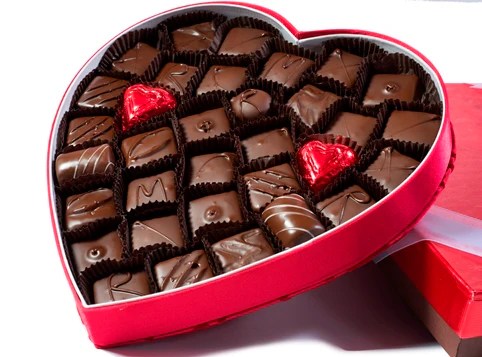
Chocolate has become the candy of choice for Valentine’s Day. We associate it with love.

And to Montezuma’s credit, scientists say that chocolate contains two chemicals. These are Phenylethylamine and Serotonin. They are associated with heightening romantic urges, happiness, and overall energy. They also increase blood pressure and sugar levels which is a similar reaction to those in love.

Why do we love it so? Why do we crave it at times?
It is the chemical Phenylethylamine (PEA), which triggers the brain’s pleasure centers and induces feelings of happiness and excitement. This chemical reaction is similar to the feeling of falling in love, making chocolate an emotionally rewarding experience.

We fell in more in love with chocolate after visiting Mexico by watching cocao being harvested and chocolate candy being made.

Dark chocolate is recommended as a healthy natural treat.

When you buy the box of chocolate, select good quality, and try to add some dark chocolate. Dark chocolate is greater in nutrients than milk chocolate.

By choosing your chocolate gift wisely, you know that you are giving your sweetheart a healthy heart treat!

Happy Valentine’s Day!
https://wellness.maryjessen.com

References:

https://www.lakechamplainchocolates.com/making-chocolate/

https://www.popcornforthepeople.com/blogs/blog/dark-chocolate-health-benefits
Nutrition for Student/Child Athlete.

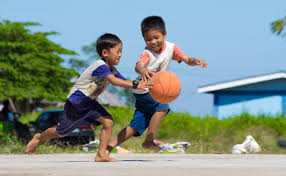
Before any game an athlete needs to prepare.

Uniform? Shoes? Water bottle? Let’s go!

But more should happen long before leaving for the game.

Any athlete knows he needs to fuel his body. This is essential to deliver the sports response he has practiced for. Your athlete may remember all the plays. But is his body able to deliver?

Let’s start with Nutrition for Child Athletes:

The meals the day before do count. The body is not functioning only on today’s foods. It is also using what you fed it yesterday.

So how was yesterday’s meals? Yes, a good athlete will always start with yesterday’s meals. Just thinking you can “fuel up” in the morning does not work.

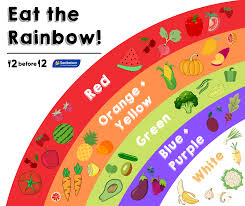
Make a good meal for everyone. Include the Food Rainbow and also good Carbs at every meal. Start by just thinking colors: Make your dinner plate colorful. Go for the basic colors.

Food Rainbow

Remember years ago how schools taught about the Food Rainbow? Choose something from each color group for your meals. This ensures that your body has a good foundation to work with.

I like to serve a fresh vegetable: slice tomato or raw carrot. Include in the main portion something yellow and dark green: peas and corn? As for dessert: sliced fruit or a fruit bowl: Some grapes and a sliced orange. Think color when you put your meal together.

There are many good reasons for this coloration. Not only does it make eating more attractive (we all eat with our eyes!), it is nutritious.

We should always try to eat from every color spectrum throughout the day.

There are other reasons for the colors to be important.

The importance of the colors in our foods:

What do the colors bring to our plate?

Reds: such as tomatoes, strawberries, and red beans contain vitamin C and vitamin A. They also contain potassium and antioxidants.

What are antioxidants: Antioxidants are compounds that neutralize free radicals. Free radicals are unstable molecules that can damage cell membranes and other structures. A diet rich in antioxidants can help prevent diseases, such as common colds or this winter’s flu.

Yellow or Orange: include carrots, peaches, squash and pineapple. All loaded with vitamins C and A, and potassium. These vitamins help enhance vision.

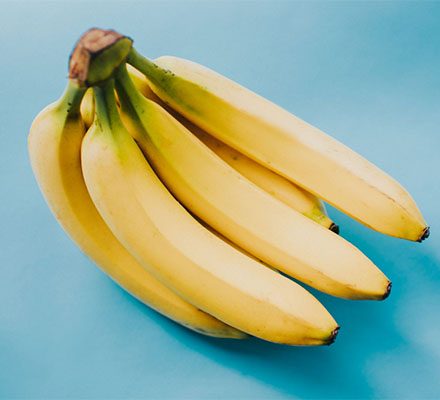
White: Mushrooms, bananas, onions, leeks, cauliflower are good for your heart and help control cholesterol. Cholesterol is also important for children as children are becoming heavier in weight.

Green: are dark green leafy vegetables: spinach, broccoli, brussel sprouts are good choices. Green vegetables also help maintain vision health, strong bones and teeth. Green means lots of Vitamin K which aids in blood clotting process. These vegetables also contain potassium. Other green vegetables: avacado, green beans, pears, cucumbers, apples, Romaine lettuce, honeydew melon, celery and green grapes.

Leeks and cauliflower make a great soup!

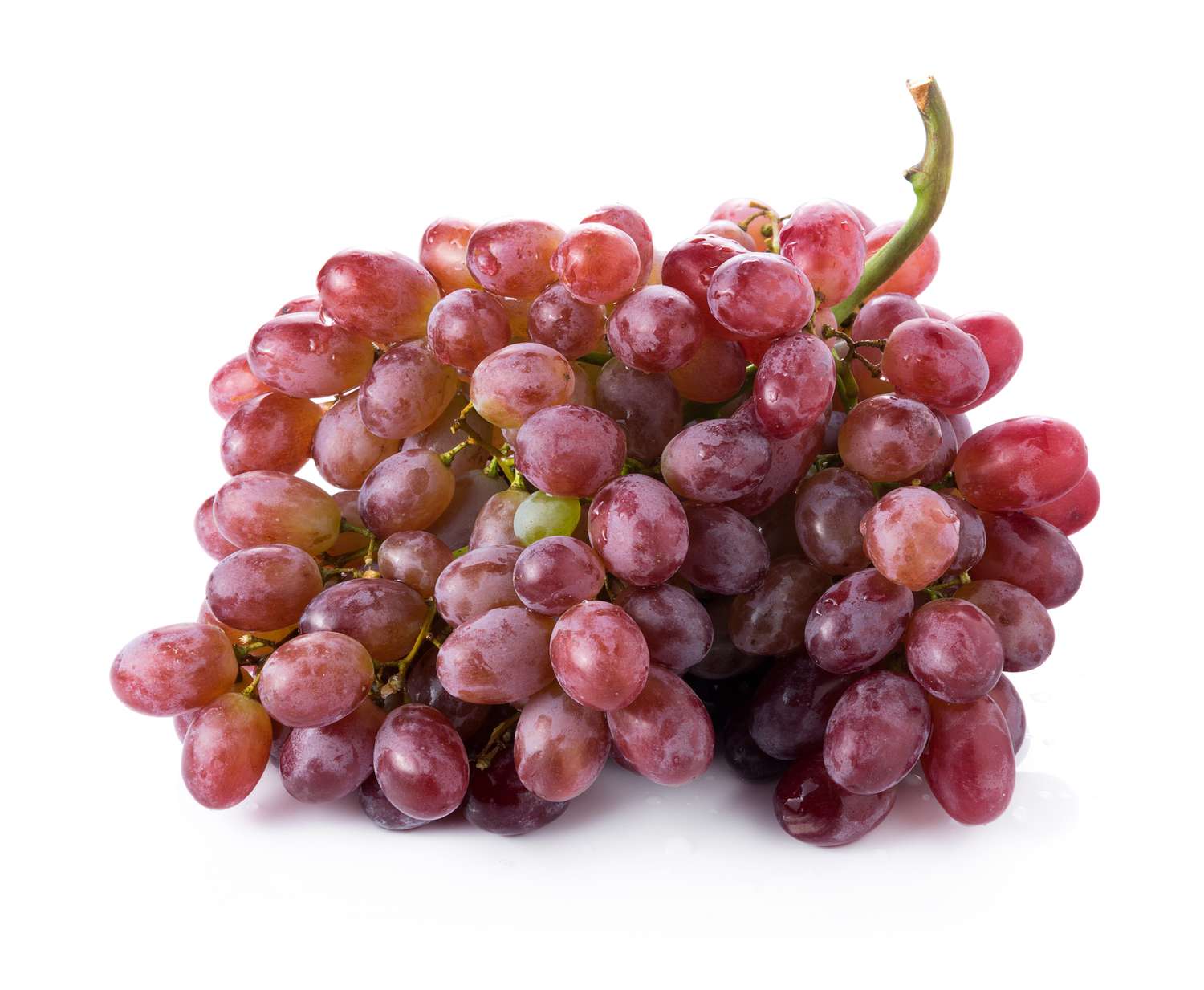
Blue/purple: are many fruits and vegetables that can get overlooked. These include cranberries, purple grapes, raisins, and eggplant. Also beets, plums, black berries and blueberries. All of these help the urinary tract stay health. The encourage good memory functions and promote healthy aging.

Blue/purples fruits and vegetables is the food group often omitted. The health benefits of this group should be a part of our daily diet as much as an apple or a banana.

Try to choose foods high in fiber as they will give greater food satisfaction.

Fresh is always better than cooked. Try not to use a lot of oil or fry. Steaming or grilling is the best. When you boil vegetables, you leach out nutrients. Pouring out the water, also pours out nutrition. (Perhaps save the water for a soup base.)

If you can’t get fresh fruits or vegetables, frozen does work. Most fruits and vegetables are flash-frozen where they are picked to keep nutrition.

Eat dried fruits in moderation. And if you are counting calories, go for smaller pieces of fruits as dried fruits can be higher in calories.

Eating the rainbow each day gives our body any needed nutrients to fuel the day and the day after.

Is there a Carbohydrate wheel?

A great athlete will start by eating nutritionally good the day before the game! Just eating a good breakfast is no guarantee of good performance.

Good performance starts before the day of the game. When an athlete is “is season,” they need to be eating well every day.

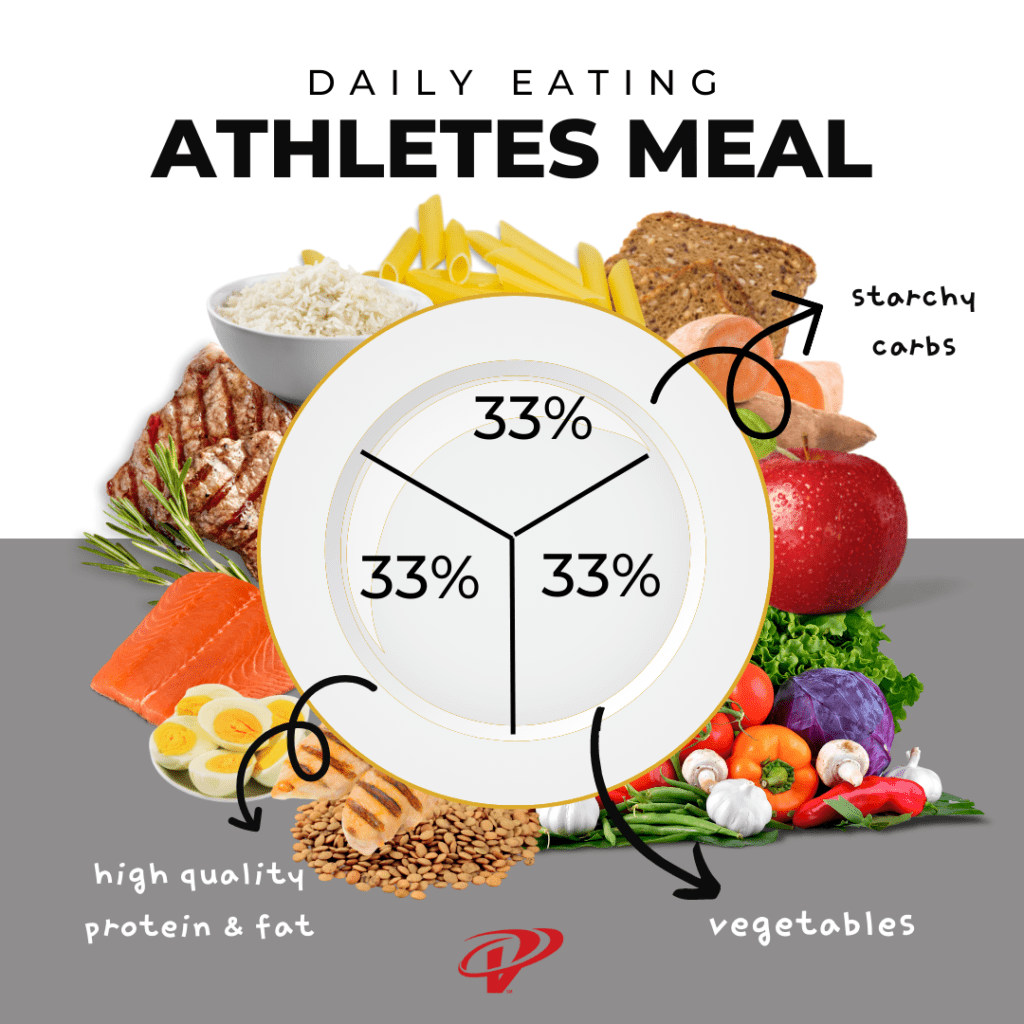
An athlete’s dinner should include the suggestions shown above on the plate.

Good carbs are: whole wheat minimally processed breads, rice, pasta, and starchy vegetables (peas, potatoes, yams, squash, red beans).

It is common for HS football teams to have a spaghetti night the day before a game.

Why all this talk about nutrition when I started with student athletes?

You don’t have to be playing a sport to know the importance of every day nutrition. We do get a lot from our foods. Just not as much as Mom and Dad or Grandparents did.

We have talked about nutrient loss in our soil. Fortify yourself with foods rich in good nutrition. However also add a multiple vitamin supplement. This is especially important if you are out with people or in crowds.

Crowds like to share. Parents and families and friends are in the audience. The bleachers can be full. And everyone is cheering and having a great time! And they are also sharing whatever their body is working on.

Be ready for the assault. Make the nutrition for your athlete important for the whole family.

Foods the day of the game are important for your athlete.

Back to the subject:

If you want to help your child do well during the game, start with a good breakfast.

Prepare a meal that has good hydration, and plenty of complex carbohydrates. A baked potato is a good start. Add some butter. Or a serving of rice and beans with perhaps an egg scrambled in. Add some onions or leeks? This is where a whole fruit juice is good. Hydration is important.

Don’t forget Oatmeal with fruit. Oatmeal is a great complex carbohydrate.

Carbohydrates are fuel for the game.

Forget the sausage and bacon and eggs. Fats are hard to digest and can create problems during activity. Focus on good carbohydrates. If you are not certain which ones, let’s chat!

Make certain your athlete has good hydration.

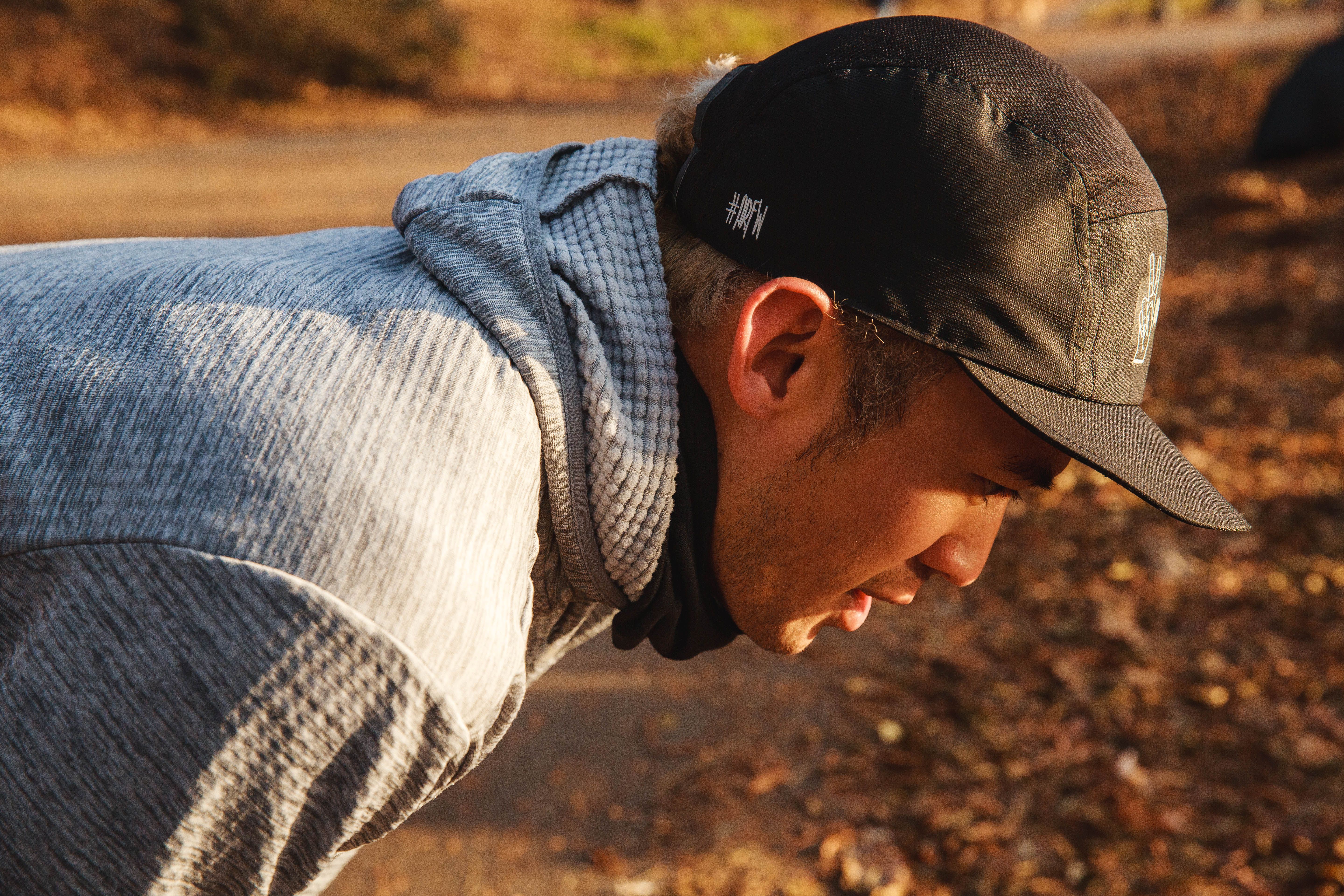
Start hydration hours before they get to the game. An athlete should have at least 2 glasses of water 2-3 hours before the game.

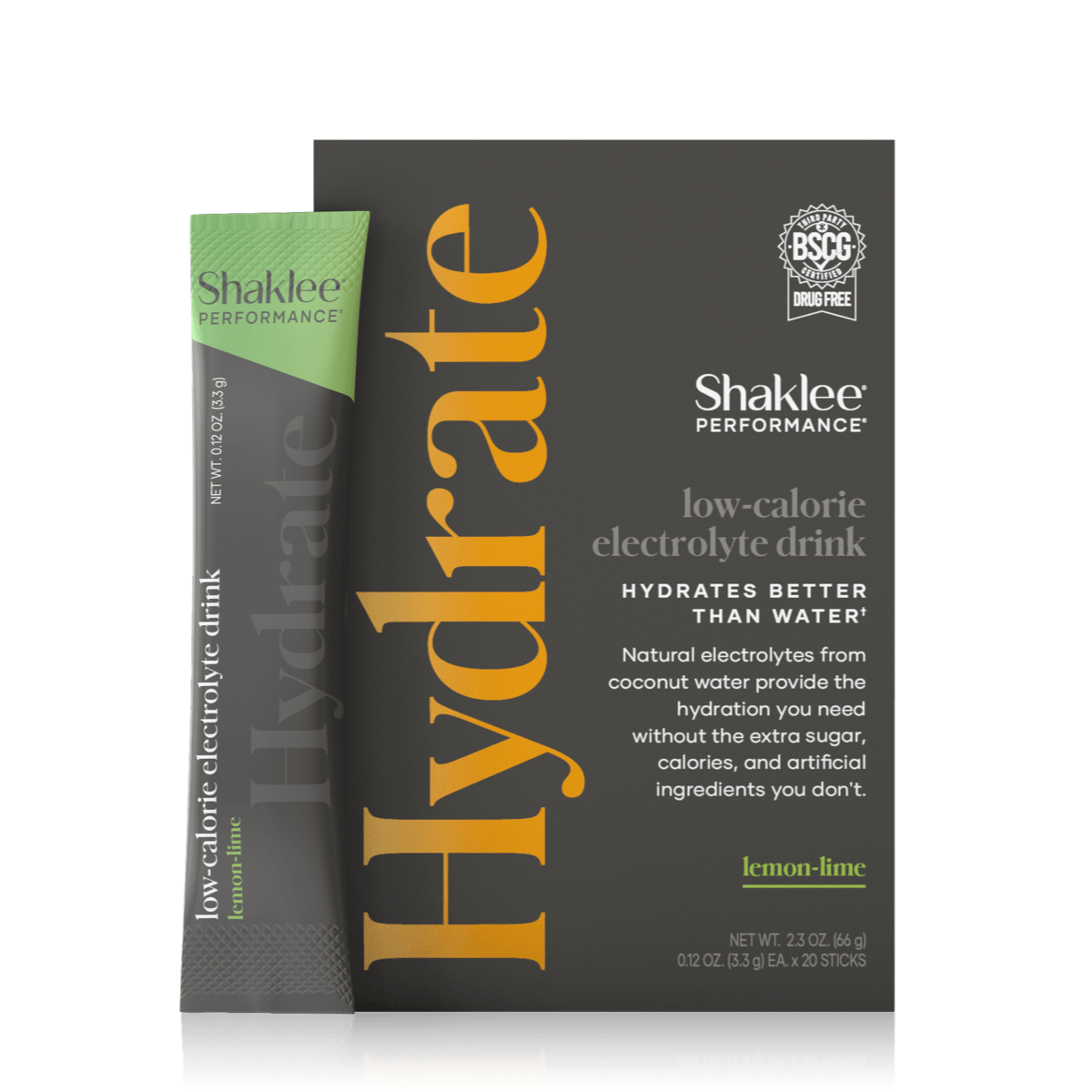
Consider an electrolyte drink. I recommend Shaklee’s Performance. It was designed for NASA, not a football team. It still ranks as the best drink and is used by high performance athletes around the world.

Monitor the color of your child’s urine. It should be a pale yellow. Dark yellow means the child is a bit dehydrated. More hydration is needed.

When an athlete is dehydrated, their face can get very red and is usually is not a cause for concern. If the flushed skin occurs along with other symptoms, such as confusion, it could indicate a heat-related illness. Difficulty breathing or exhaustion might also suggest heatstroke or heat exhaustion. Pay attention to your child’s breathing when their face is flushed.

During the game hydration is important too. A good sports drink will help with balance. It contains three basic components: fluid, carbohydrates (otherwise known as sugar), and electrolytes (usually sodium and potassium). It does not need vitamins or antioxidants. The body only is looking to regain balance of fluids.

Water does not help other than being just a fluid.

During a game, it’s recommended to drink fluids every 15-20 minutes. Take in around 4-8 ounces of water or a sports drink each time.

Fluid intake depends on the intensity of the activity and the climate they are playing in. For longer games, consider a sports drink to replenish electrolytes lost through sweat.  Offer a sports drink when the playing area is quite warm.

Teach your child to listen to their body:. As a parent, you should be watching your child for signs of thirst. Don’t wait until your child is very thirsty to drink, as that indicates dehydration is already setting in. Watch that they drink every chance that is available.

Be aware of your child’s needs. Don’t let them “hit the wall.”

In sports, “hitting the wall” occurs when an athlete suddenly becomes fatigued. The exhaustion happens due to depleted carbohydrate stores. If the athlete had started with a sound breakfast, this would not happen.

And many times it is in school sports. This means the athlete ran out of “gas” or not enough carbohydrates to fuel his body.

It is quite tough on the body. A proper recovery should happen after this. (Start the day with a good carbohydrate load: good fibers, good wheats, little sugars.)

After the game: Recovery is very important.

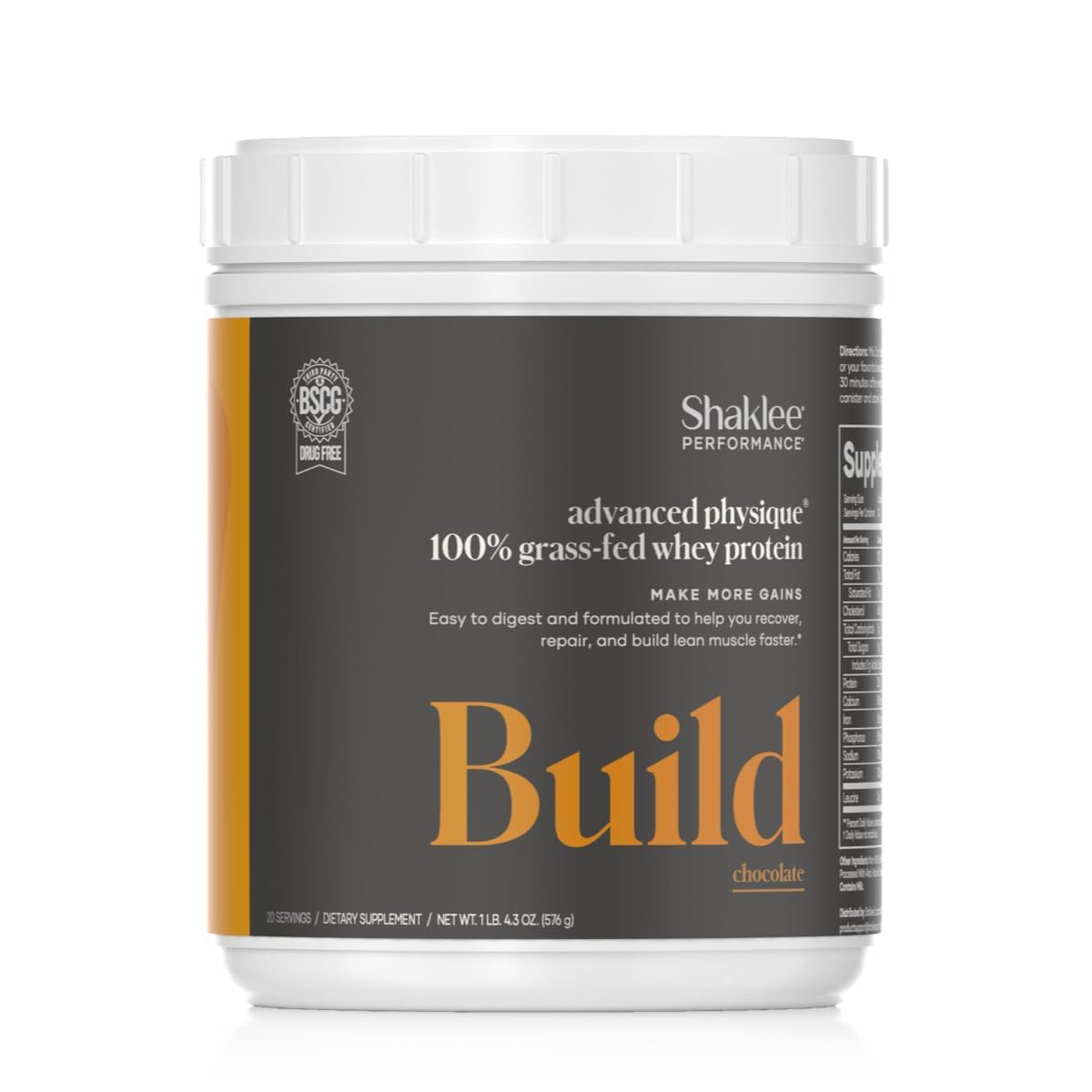
And be certain to follow the game with a recovery drink, Performance/hydation sports drink. I suggest to have a Recovery drink available in the car for when the game is over.

Recovery is just as important as getting ready for the game.

Even though “game day” is over, a good athlete is always preparing for the next game. The athlete needs to eat healthy all season. Keep hydration up. Be aware of your child athletes’s hydration levels. Don’t wait until a dry mouth. Drink before that.

If you want a personalized plan for your athletic child, I’ll be glad to work with you.

https://www.maryjessen.com

References:

https://foodinsight.org./eat a rainbow

The Real History of Thanksgiving: Myths & Truths

What is the history of Thanksgiving?

Was it a grateful celebration? Or was it something entirely different?

Many holidays we celebrate have great history. Some holidays have a distorted history. I’m hoping to pass along the real stories of how America was settled and the how the First Thanksgiving was celebrated.

When did the Thanksgiving Holiday start?

The formation of Thanksgiving as an official, United States holiday, did not happen until November 1863, during the Civil War. President Abraham Lincoln officially established the holiday to improve relations between northern and southern states.

“It was propaganda,” it is explained. “The proclamation of the holiday was aimed to build an event of community. The goal was to create a deeper narrative about community building. It was about coming together in shared brotherhood and unity.”

The Thanksgiving of today is not an absolute factual event. There were many “thanksgiving” meals across found in North America, European cultures, and other cultures of the world.

In ancient times, Egyptians, Greeks, and Romans paid tribute to their gods for a good harvest. Our Thanksgiving also bears a resemblance to a Jewish harvest festival of Sukkot. It was simply a meal shared with friends and family after harvest. Sometimes there was a celebration of the harvest.

Who were the first settlers?

It was 1498. John Cabot worked for King Henry VII of England. Six years had passed since Columbus landed in the West Indies. Cabot was an Italian sailor who sailed into North American waters. He may have explored the Maine coast. However, there is no concrete evidence of it.

A century after Cabot’s voyage, several European ships briefly visited the area. Some of them put ashore to make repairs. Others processed fish catches.

The Plymouth Company established the first settlement at Popham, Maine, in 1607. This was the same year as the settlement at Jamestown, Virginia. The Popham colony didn’t survive the harsh Maine winters. Therefore, Jamestown, Virginia, enjoys the distinction of being regarded as America’s first permanent settlement.

Florida, Maine, Texas, and Virginia have each claimed sites of the First Thanksgiving in North America.

Europeans had been living and working in North America for many years prior to the Pilgrims.

It is said that the First Thanksgiving occurred on May 27, 1578, in Newfoundland Canada, and was held by Europeans. However, some believe the colonists of the Popham Colony in Maine may have conducted the first Thanksgiving service in 1607.

Fishing vessels with Basque, English, Portuguese, French, Dutch and Spanish crews were making seasonal expeditions. Basque vessels had been fishing cod shoals off Newfoundland’s coasts since the beginning of the 16th century. Their crews used the natural harbor at Placentia. French fishermen also began to use the area. The Pilgrims were not first on the land.

What is a “pilgrim?”

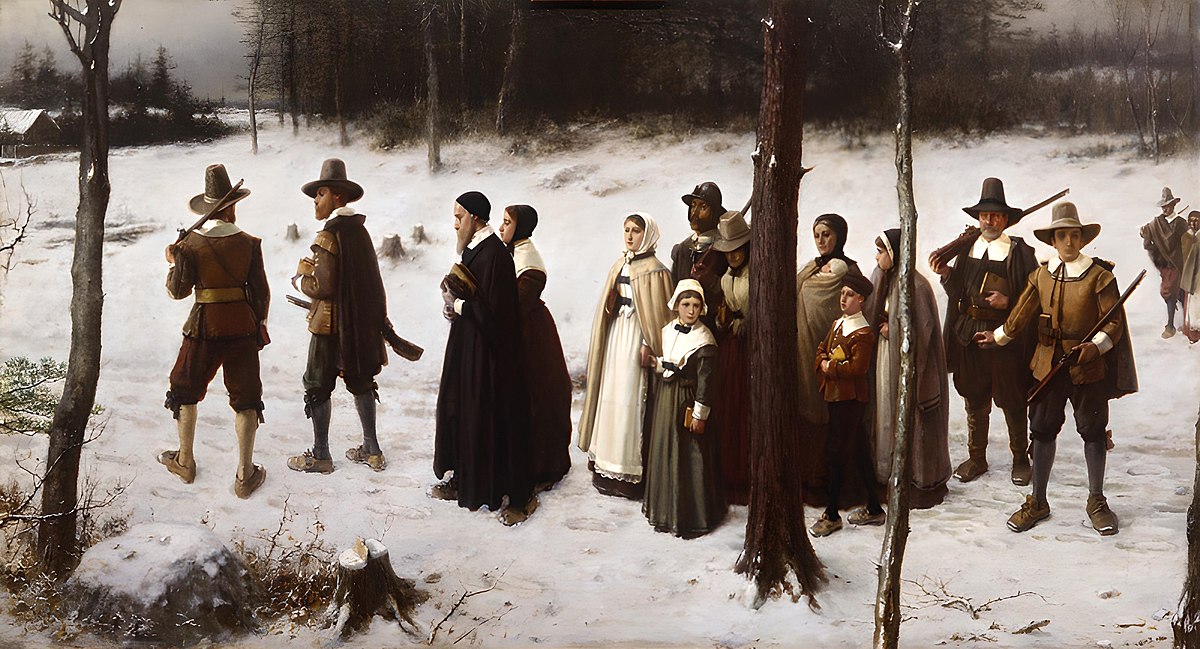
By definition, a Pilgrim is one who searches for religious freedom. By nature they are not explorers. The Pilgrims were primarily Puritan. Consequently, they were not exactly friends of the English church. Puritans held strong Calvinist Protestant beliefs. They aimed to completely eradicate traces of the Catholic Church and the English or Anglican Church. They were out to spread their beliefs to everyone, especially the heathens of North America.

The Mayflower set sail on 16th of September 1620, from Plymouth, UK, for a voyage to America. But its history and story start long before that. Its passengers were in search of a new life. Some sought religious freedom. Others were looking for a fresh start in a different land. Some dreamed of great wealth.

Many Pilgrims were seeking a place to freely practice their faith. Others were lured by the promise of land ownership and prosperity in the “New World.” Some were desperate to leave due to persecution.

Mayflower finally lands, but not where they wanted to go.

When the Mayflower landed after along trip of 66 days, November 9, 1620, only 53 of the 102 passengers survived. They did not land at Plymouth Rock. The English really intended to land south of the Hudson River, somewhere in New Jersey, a warmer harbor. However, a storm blew the ship off-course. It put them ashore off Cape Cod harbor, Maine, in a dark and very cold winter.

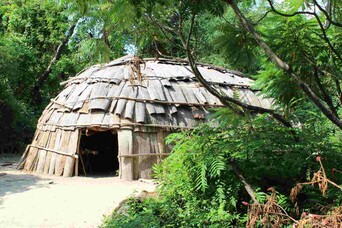
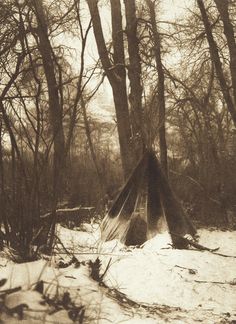
The Pilgrims first had to find shelters for their winter ordeal, and find water and food. It is recorded that some stayed in abandoned Native American’s lodges. Throughout the first winter, many Pilgrims suffered from weather exposure, scurvy, and outbreaks of a contagious disease.

Unfortunately, the Pilgrims had no knowledge of the local wildlife. Even if they did, they lacked the knowledge of how to capture it, nor the tools to hunt. They had left in haste, and did not pack well. Nor were they aware of what was needed.

(Half of the landing party died that winter. If the Pilgrims were not the very first settlers, why was there no knowledge of what to expect? Some say it was due to the hasty departure to avoid persecution in England.)

The Mayflower sailed back to England in the spring of 1621. Despite the hardships of the winter, none of the Pilgrims returned with the ship. The Mayflower resumed transporting cargo, never returning to Plymouth. By 1624, the Mayflower’s sailing life was over and the ship was described as being “in ruins.”

It was April of 1621 when Samoset, a Native Abenaki Indian, entered the village. Samoset, who spoke English, greeted them by saying “Welcome!”

(Samoset had learned English from interactions with an English fishing camp established in the harbor. Samoset was a lesser chief of the Abenaki people. He often sailed with Captain Dermer, a regular explorer of the region.)

Who was Squanto?

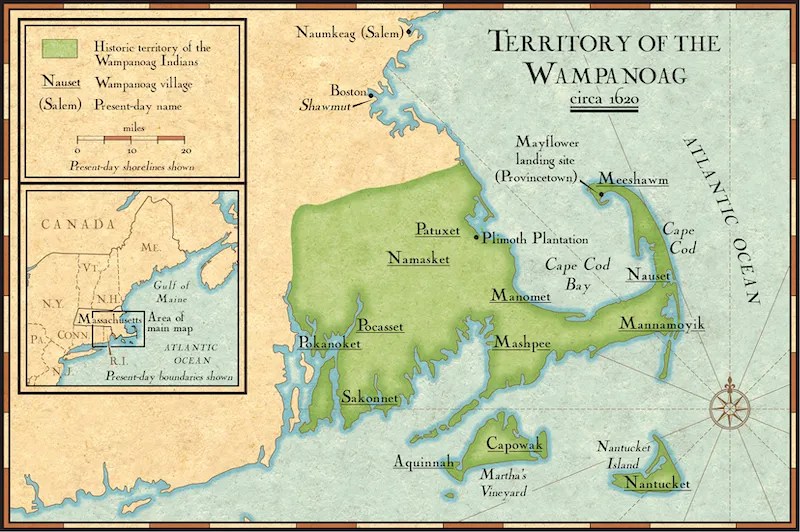
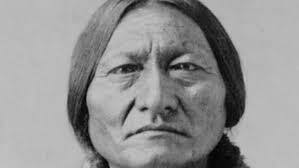
Several days later after Samoset welcomed the Pilgrims, Samoset returned with Squanto, a member of the Pawtuxet tribe. (Squanto was living with the Wampanoag tribe as his entire tribe had been wiped out due to an epidemic.)

The story is true that the early settlers could not have survived without the aid of Squanto and the Wampanoag tribe. As said, they were ill-prepared to fend for themselves. The Wampanoag tribe taught the Pilgrims how to hunt for food in the winter.

(Did you ever wonder how Squanto could communicate with the Pilgrims? An Englishman kidnapped him in 1614. Along with two dozen others, and he was taken to Spain to be sold into slavery.

Squanto escaped captivity, possibly with the help of Catholic friars. He made it back to America, only to discover he was the only survivor of his village. An epidemic had swept across the New England area while he was gone.

Samoset could also speak English. Many years earlier, many Native Americans had been kidnapped and to be sold in England. Samoset was also one of those kidnapped.)

(Interesting that both men were able to escape England and return to America. I was unaware of kidnapping of Native Americans many years before the Pilgrims. Weren’t we taught that it was the Pilgrims as the very first settlers?)

Squanto helped the settlers, in the Spring, by teaching them how to plant corn and other vegetables. With the first harvest, the settlers decided to have a thanksgiving feast in celebration of a good harvest.

Squanto also showed the Pilgrims how to extract sap from Maple trees. He taught them how to catch fish in the rivers. Squanto, also, pointed out which poisonous plants to avoid. He helped forge an alliance between the Wampanoag tribe and the Pilgrims.

Unfortunately the time Squanto works with the Pilgrims is short as he dies from a disease two years later.

(Years later, 1676, the English sold many Wampanoag men into slavery in Bermuda, the West Indies, or on plantations and farms run by colonists in New England. It was not unusual to kidnap Natives and sell them into slavery.)

Very tough times.

The Wampanoag people, the “People of the First Light,” played a crucial role. They saved the Pilgrims from starvation and death during the harsh winter of 1620–21.

The first Pilgrim homes were most likely abandoned Native American villages. Here many also caught the diseases that killed the original inhabitants.

Diseases such as smallpox, bubonic plague, and chickenpox were introduced by the European fishermen. Measles, diphtheria, influenza, malaria, scarlet fever, typhoid, tuberculosis, and pertussis were also introduced.

These were diseases to which Native people bore no natural immunity. Prior to the arrival of European colonist/ fisherman, Native people were plague free. These European diseases killed many many Native Americans.

It was a very tough living those early years. Children worked alongside their parents. Many suffered from the great burdens of creating a village. It was not unusual for a child to die due to hard labor, disease, or the cold.

The Pilgrim’s dream was to bring the Gospel of the kingdom of Christ to remote parts of the world. But they were ill prepared to do that.

The first Thanksgiving was not the first.

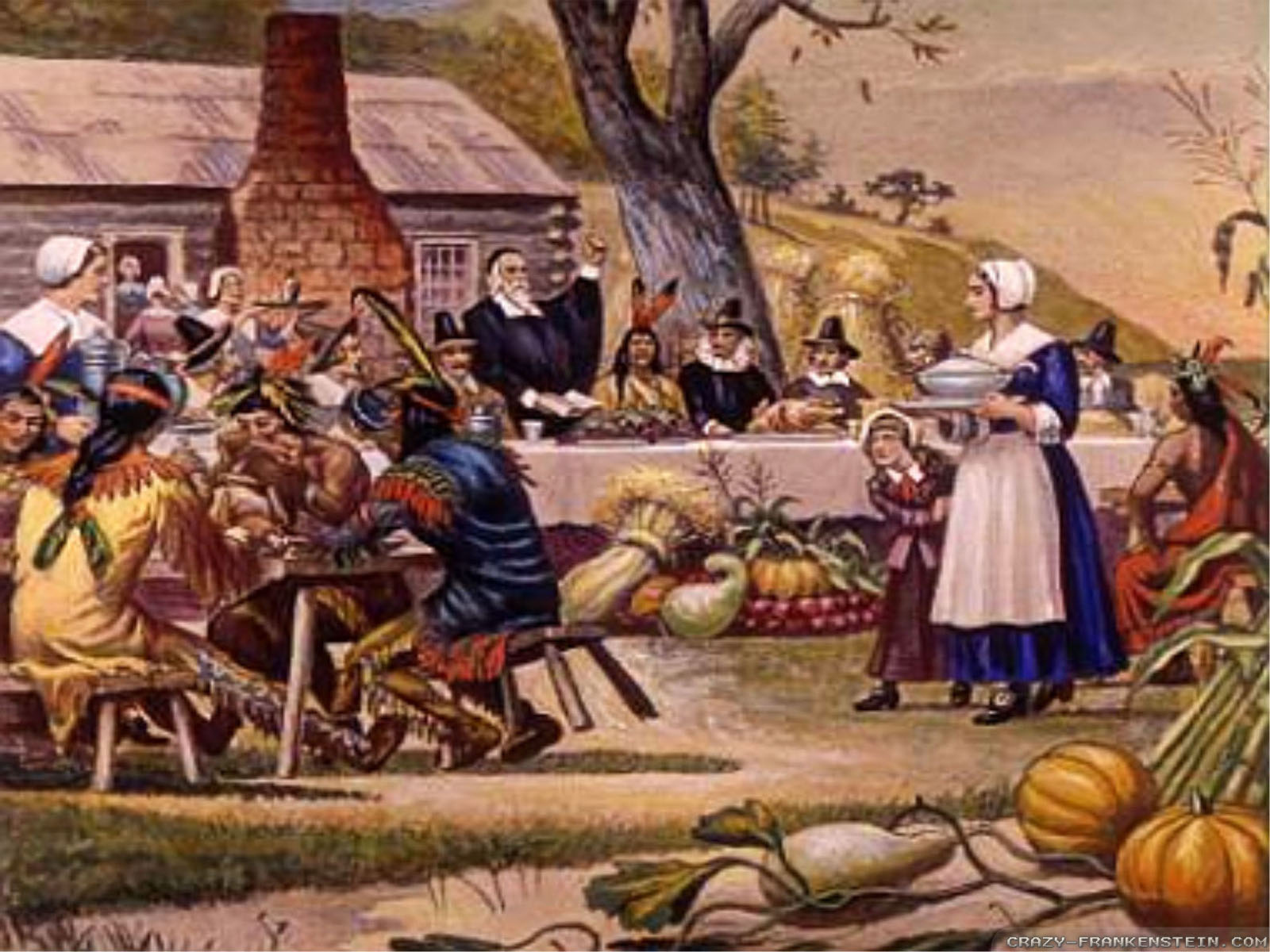
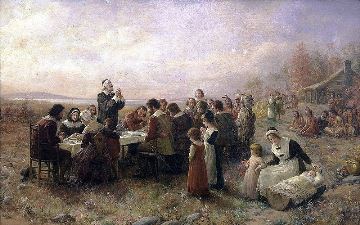
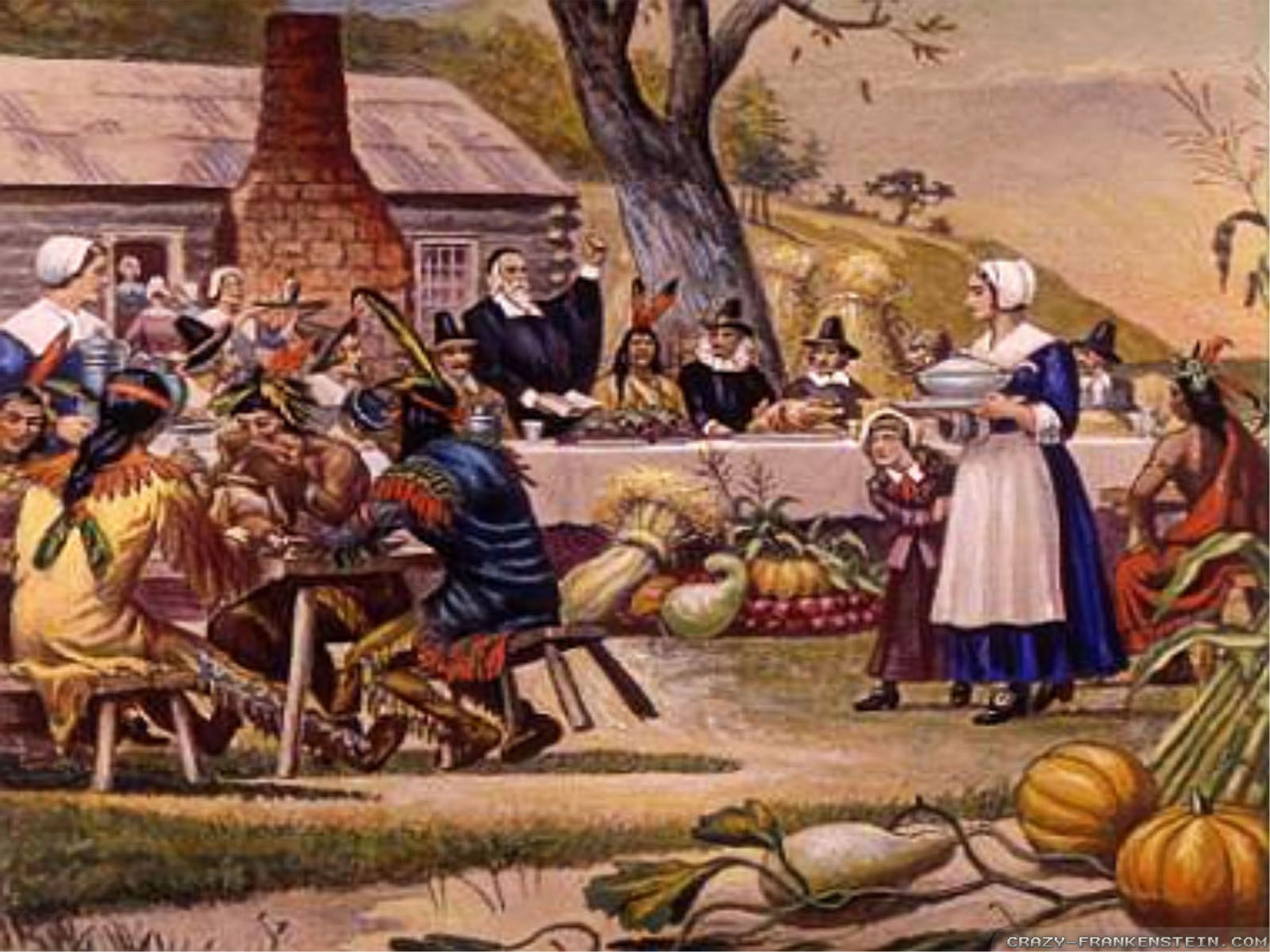
There were many Thanksgiving services in America long before the Pilgrim’s celebration of 1621. The first Thanksgiving, with the Wampanoag tribe, was a non-religious feast, that took place over three days. Games were played. Alcohol was consumed. Indians were present. But they all did not eat together.

Most of the dishes were likely prepared using traditional Native American spices and cooking methods.

In 1623, the Pilgrims at Plymouth Plantation, Mass. held another Thanksgiving celebration. The colonists were praying and fasting for rain as a drought had consumed the area. The rains did come a few days later. And the Dutch supply ship arrived.

It was June 30, 1623, when the Dutch supply ship arrived. The colonists held a day of Thanksgiving and prayer. This festival seems to be the start of Thanksgiving becoming a religious and social event for the Pilgrims.

Europeans brought diseases to the Native Americans.

Prior to European arrival, America’s Indigenous nations did not experience illnesses attributed to livestock, overcrowding, or poor hygiene or sanitation.

“Residents of northern Europe and England rarely bathed. They believed it was unhealthy. They also rarely removed all of their clothing at one time. They thought it was immodest.”

“The Pilgrims smelled bad to the Indians. Squanto ‘tried, without success, to teach them to bathe,’ according to Feenie Ziner, Squanto’s biographer.”

In fact, three years before the pilgrims landed, English and French fisherman transmitted diseases to tribes. They came ashore to find fresh water and firewood. They also captured Native Americans for the slave trade. And they left behind great illness for Native Americans.

It was not easy. Tens of thousands of Native Americans and Europeans died during this time from plague. (This was the time of Squanto held captive in Europe). The plague wiped out a vast majority of the inhabitants of coastal New England. Within 3 years, 90 to 96 percent of them were gone. This was a death rate unknown to man.Those living in the area perished from conflict, conquest, and diseases. (When Squanto returned to American, his tribe was gone.)

Those who did survive left their communities to join others, bringing the illnesses along with them. This caused many Native Americans to perish, even though they had not encountered Europeans.

Religion and exploration and conquer.

Throughout history, religion has served as a justification, and for the English Separatists, it was no different. They believed the wide-spread death and devastation of Native Americans due to disease was divine provenience. They thought God willed them to take over the land.

“By the time the Native populations of New England had replenished themselves to some degree, as so many had died from plagues, it was too late. Native Indians could not expel the intruders.

Colonists occupied lands cleared by Indian farmers who had vanished. As a result, colonization proceeded much more quickly. Native Americans endured devastating physical assaults, particularly from European plagues. If disease and plagues had not happened, the colonization of America would have been quite different.

(Interesting how great illness can shape history. The Pilgrims easily settled in their first years with little conflict of natives. (The local Native American tribes were generous and welcoming.) The widespread death of the Native Americans caused this lack of conflict. Introduced European diseases were responsible for many, many, many deaths.)

It was a very tough time of conquer for the Native American Indian. Colonization brought much death to the natives. It was an awful price to pay for the Pilgrims goal of religious freedom and wealth.

Foods of the first Thanksgiving:

It is noted that the Indian tribe, Wampanoag, arrived with five deer at the first Thanksgiving. The deer were roasted on an smoldering fire pit. Perhaps some of the meat was used for a stew.

Local vegetables were onions, beans, lettuce, spinach, cabbage, carrots, and perhaps peas. Corn was removed from the cob and made into corn meal. This corn meal was boiled and pounded into a corn mash, with a molasses sweetener.

Fruits included blueberries, plums, grapes, gooseberries, raspberries, and cranberries.

It is believed that much of the Thanksgiving meal consisted of seafood. Mussels, lobster, bass, clams, and oysters might have also been a part of the meal.

Potatoes had no place in the meal. It was the Spanish that introduced the potato to Europeans in 1570. Plant roots that were eaten included: Indian turnips, and groundnuts. (A “groundnut” is a variety of roots and tubers. It also includes leguminous crops similar to peanuts. These mature and ripen underground.)

Pumpkin was not served due to a lack of butter and wheat flour. And the settlers had yet to construct an oven for baking. Some say that settlers hallowed out the pumpkin. They may have filled the shell with milk, honey, and spices to make a custard. Then, they roasted the pumpkin whole in hot ashes.

If the harvest was good, there was plenty to eat.

It is said that this “first Thanksgiving meal” the colonists were outnumbered by Native Americans two to one. The Native Americans knew this type of feast well. It was central to their regular spiritual practices. They held these feasts to give thanks for a natural bounty. (Native Americans did not eat at the same table as the settlers.)

Today’s Thanksgiving:

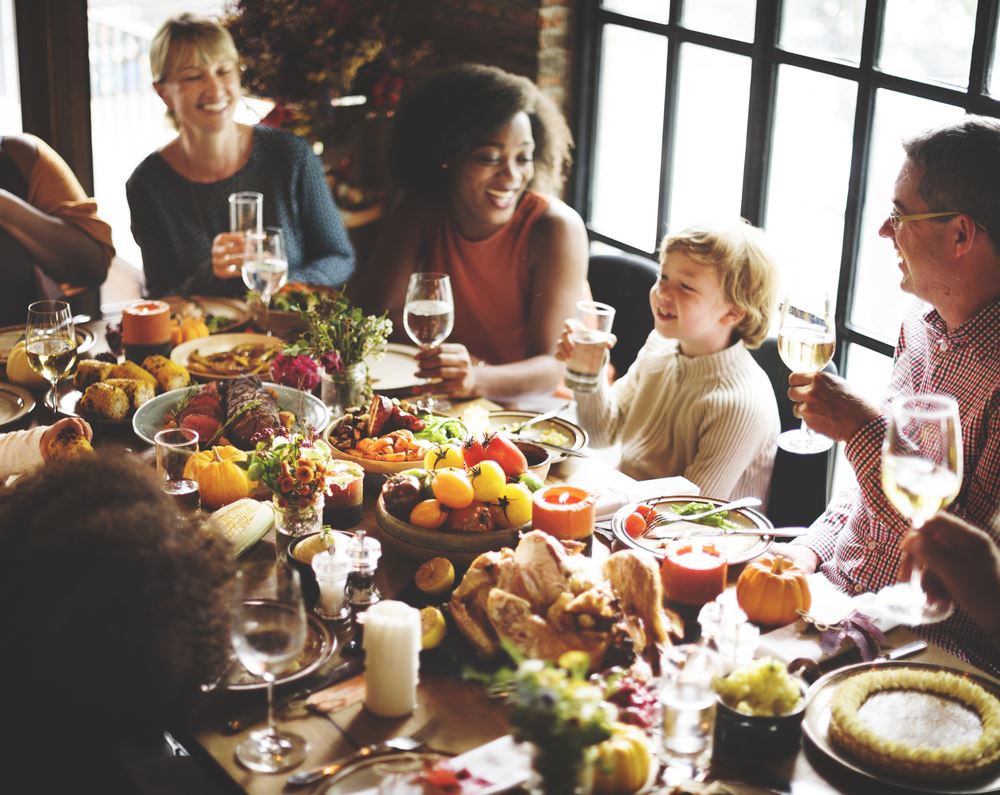
Today, Thanksgiving is a time for families to gather together. Many churches offer special services. We all need to thank Native Americans for the opportunity to celebrate. Without their guidance, early Pilgrims would not have made it.

For some scholars there is still an argument as to whether the Pilgrims really had the first Thanksgiving. History has recorded other Thanksgiving meals among European (Spanish) settlers in North American before the Pilgrims celebration.

Macy’s Thanksgiving Parade, a part of today’s Thanksgiving celebration.

What would Thanksgiving be like in the 20th and 21st century without the Annual Macy’s Thanksgiving Day Parade?

Parades have always been a part of a citys’ or nations’ celebration. Macy’s Thanksgiving parade started in 1924. It is the largest and most famous, attracting 2-3 million spectators along it’s 2.5 mile route. It also draws an enormous television audience. We all have our favorite bands, performers, floats, and giant balloons each year.

Thanksgiving Controversy.

A Thanksgiving meal holds a long tradition. We all look forward to the celebration of, perhaps, turkey and all the trimmings. We volunteer in food banks so that many can also enjoy the meal. Many families take days to prepare for this meal. Pumpkin pie is a tradition for many. We forget how this holiday came to be. We may not know of who sacrificed so much that today we can give Thanks.

Why don’t we thank Native Americans for their role in our History?

Here in America, Native Americans take issue with the Pilgrim story. It masks the long and bloody history of conflict between Native Indian tribes and the European settlers. This conflict resulted in tens of thousands deaths from both sides.

We need to be aware of the needs of Native Americans today. We have forgotten them. Use Thanksgiving to pray for them, and consider a donation to a local tribe. Every state has a local tribe. They are there.

We need to remember that Native Americans helped us celebrate a “first” Thanksgiving. We also need to teach this to our children. It was a very difficult time for an ill-prepared group of Pilgrims and Europeans.

The Pilgrims intended to convert the “natives” to their religion. They had no regard for what the Native Americans had been practicing.

It was all about the Puritan way as the ONLY way to God. Today I think we are aware that there are many religions that pay homage to God, but in different ways. We are not to judge who is the better way.

What to share with our children today:

Teach our children that a Thanksgiving meal is a special celebration for everyone’s family.

Teach our children how much Native Americans gave of themselves, their cultures, their homes, their traditions in the conquest of North America.

Teach them that the Native Americans really suffered for all their help in the conquest of settling North America.

Teach our children to respect others and their beliefs. Let’s also give thanks for the help of Native Americans in settling North America.

And help your family to remember others at Thanksgiving.

Happy Thanksgiving!

This special occasion unites families and friends. We create cherished memories as we gather around the table to enjoy a feast filled with delicious dishes.

It’s a time for gratitude, reflection, and celebrating the abundance in our lives, while also remembering those less fortunate. It’s a time to think about how this holiday began.

As we share laughter and stories, let us appreciate the meaningful connections we have and express our heartfelt thanks for the blessings that enrich our lives.

References:

https://https://www.potawatomi.org/blog/2020/11/25/the-true-dark-history-of-thanksgiving/

https://www.history.com/topics/thanksgiving/first-thanksgiving-meal

Kickstart Your Day: The Importance of Breakfast

Start your engine! Breakfast energizes your sleeping body. Breakfast starts your engine!

You have gone without food or water for at least 10-12 hours. Your body is dry and craving fluids too. There is no gas for that engine to run on.

Your inner body has constant need. It is like an engine that needs a constant flow of fuel. It is your metabolism, a chemical process, that demands energy. Your metabolism is always active. It breathes, circulates blood, digests foods, grows and repairs cells. It manages hormone levels and regulates your body temperature. It takes place inside you as your body converts foods and drinks into energy. This process looks for an energy source first thing upon rising.,

Think of your body as that fancy car above. We know that car needs good fuel to run efficiently. We know it needs fluids too.

Your well is dry. Your fuel tank is empty.

Breakfast kickstarts this engine into motion. Start with a good glass of good water.

Ever feel you just can’t get started in the morning? Seem to drag yourself out of bed? Can’t seem to get going?

Well its because you are low on fuel. Your engine is running on fumes! It’s choking and sputtering! It’s looking for the “pit stop.”

Breakfast is where you fuel your engine, and start to burn calories/fuel throughout the day. This important meal helps you focus and have enough energy to do your daily tasks.

Breakfast also helps lower bad LDL cholesterol. It reduces the chances of getting diabetes and heart disease. The first meal of the day, Breakfast, actually helps you not gain weight.

Your metabolism is like a fine tuned engine. Breakfast is the best time to “increase” your metabolism. This is when you boost the fine running of your engine. Give your body enough fuel that it runs smoothly all day, and is not dragging or running on idle.

When you skip breakfast, your body reads that as it then needs to conserve rather than burn any incoming calories. Conserve! Your body goes into a slower mode of energy. You are drifting to that pit stop! You’ve got things to do and places to go! Your body needs fuel!

And as that engine slows down, you begin to look for fuel. That’s when that donut, that you would normally pass up, looks so good!

People who skip breakfast, eating fewer calories, creating smaller meals, eating less during the day, actually gain weight. Your metabolism is in a conservation mode.

Sounds strange, but true.

The less you give your engine, the more it will try to conserve. It Has to keep running. If you don’t feed it, it goes into “idle,” and your metabolism, that burns calories, slows down.

We want it to be in an active “burning” mode. You need to add some good carbs/fuel to that “pit-stop-breakfast.”

(Your body’s energy source is from glucose. Glucose is broken down from the good carbs you eat. The body stores glucose for energy as good fat. Some of this glucose is stored as glycogen in your liver, and smaller amounts in your muscles.)

It is during the night that your engine goes to idle, using stored fuel for maintenance work. During times of not eating, or going without foods for 12 hours or more, your glycogen stores are low. Your liver releases glycogen as glucose to keep blood sugars low.

Once your glycogen stores are used up (no food coming in), your body looks elsewhere. And energy levels dip. This can be why it is hard to get out of bed. Your engine is sputtering.

As you watch your fuel gauge, learn how to keep better energy levels for yourself. This practice restores your glycogen storage as needed and keeps your metabolism UP during the day. And all starting from a good breakfast.

What are we choosing for your first meal of the day?

Do you start with cereal?

Do you start with eggs and toast?

Or perhaps you are starting with Eggo Waffles?

Eggo Waffles are not good energy sources. Neither are Pop Tarts. The nutrition in them is minimal for good energy. They are meant to be a cookie or a dessert. The sugar content is too high for breakfast.

What is your normal breakfast?

Is your normal breakfast a bowl of boxed cereal? Are you looking at breakfast as a meal, or just a pit stop on the way out the door? Are you chugging down a bowl of cereal as you are running out the door?

It’s ok to choose boxed cereal, if you are choosing one without a lot of sugar added. Look also for fiber. This is a great time to add fiber to your diet. It slows down digestion, giving your body longer lasting needed energy.

Aim for boxed cereals that contain no more than four to six grams of sugar per serving. This amount is about one to one and a half teaspoons of sugar. When I think 1 and 1/2 teaspoons of sugar I think that’s a lot, especially on an empty stomach. Unfortunately, the above cereals are high in sugars.

Be careful of the sugar content. Sucralose “This artificial sweetener substitute of sugar can be about 600 times sweeter than sugar concentrate. Some regulatory agencies have stated that it’s safe for consumption. However, some studies have suggested that it may affect health negatively.

Sucralose, aspertame, or any other artificial sugars does more harm than good, especially for that young child. Be certain to read the label on the box. Look for cereals with natural sugars, or minimal sugars.
Artificial sugars can be 200 to 700 times sweeter than table sugar
.

Oddly enough, Rice Krispies, (which always seems to be full of air! Isn’t the slogan: snap, crackle, and pop?) by itself has 9 grams of sugar. Imagine the count with marshmallows!

Artificial sweeteners don’t contain calories or good sugar. This can be an analogy to poor fuel for that high performance engine. Poor fuel for your personal “engine” lacks beneficial nutrients like vitamins, fiber, minerals, or antioxidants. All sweeteners do is over-rev your engine. And we know what that can do to our beautiful, expensive car. Imagine it in your body.

Sweeteners like fruit juice, honey, molasses and maple syrup contain natural sugar and have some nutritional benefits. Fruit has fiber, vitamins and antioxidants. Even raw honey and maple syrup can contain antioxidants and minerals like iron, zinc, calcium and potassium. Raw, natural, local honey is very good for you. Look at breakfast with a need for good fuel for the day.

How can I child sit still in class today after indulging in a high sugar breakfast? The average breakfast boxed cereal has TWO teaspoons of sugar in a serving. Does your boy eat one or two servings? Growing boys seem to eat more than one bowl many times. That’s a lot of sugar.

Consumer Reports rates the best breakfast cereals. The cereals rated highly include Nature’s Path Organic Heritage Flakes and Post Grape-Nuts Flakes. General Mills Cheerios and Post Great Grains Raisins, Dates & Pecans are also among them. General Mills Total is one of them.

One Degree Organic Foods Sprouted Ancient Maize Flakes is another. General Mills Wheaties is also highly rated. Kind Honey Almond is included. Post Grape-Nuts Original and Barbara’s Multigrain Spoonfuls Original are listed too.

Adding fruit to make the cereal bowl makes the cereal sweeter, the milk sweeter, and more nutritious. Cooking oatmeal in the microwave can open the door to fun. Oatmeal with applesauce, cinnamon, and nuts will taste like a cake! But this kind of “cake” will do great things to your personal engine.

What’s the point?

We decided that there is great importance with eating Breakfast.

Cereal for breakfast is fast and quite common. But what is the nutrition value in that bowl of cold cereal? Will it help your kiddo to sit still and learn? Have you given his body a source of good “brain-power?” Remember poor fuel will make an engine stall, or stop, or sputter.

Creating a good breakfast can be simple. Start with a scrambled or fried egg. Add a couple of cherry tomatoes or perhaps a bit of last night’s vegetables. Raw vegetables are allowed at breakfast! And don’t forget the fibers of fruit. A couple carrots alongside scrambled eggs is a winner. Not only does it add colors, but great nutrition.

What about English Muffins and eggs? These can be made ahead to pop into your microwave. (You can scramble eggs on the weekend, cut into squares, freeze flat, and add to your muffin.)

Ten reasons why breakfast is so important:

  • Improves Concentration and Focus. …
  • Helps Lift Your Mood. …
  • Helps Manage Your Appetite. …
  • Helps Your Heart. …
  • Improves Academic Performance. …
  • Aids in Weight Management. …
  • Helps Pregnant Moms Meet Nutritional Needs. …
  • Boosts Your Immune System.
  • For many people it is also the time for milk! Don’t forget the milk. Even adults need calcium.
  • A glass of milk and some fruit is a sure win!
  • Calcium is important. If you can’t afford the bottle or box of milk, mix it 1/2 and 1/2 with dehydrated milk. Chill well and your family won’t notice the difference.
  • Your body needs calcium. Calcium is needed for growing bones, and for aging bones. Water or coffee or even tea does not make it, unless you add a generous amount of milk. No sugar.

Breakfast actually starts your metabolism. It energizes our body. We are concerned about our metabolism and find it difficult to lose weight. Why would you lose the ability to jump start your metabolism? Isn’t a faster metabolism what we want such that we can burn more calories?

You can also start with a good fiber cereal. Oatmeal? There are several different kinds: Steel Cut Oats are my favorite. Don’t buy the ready to serve packets. Too much sugar. You can make it just the same by buying quick cooking oats and cooking right in the bowl. Add milk. Add fruit. (Fruit cups with natural sugar) and you are good to go!

Different fruits will give the cereal different tastes. You can also add cocoa to the cereal. Just enough to make the cereal brown. Add strawberries!

So much better than the packet mix of Quaker Oats Strawberry Oatmeal. Some packets can carry 10-17 grams of sugar! or 4 teaspoons of sugar! Adding fruits is a good way to add taste and sweetness to quick cooking oats.

How about adding nuts and pure maple syrup? Strawberries and blueberries? All created in one bowl. (cheaper than by package) And with much more nutrition.

What are the suggestions for a fast and easy breakfast? Breakfast should give our kiddos learning power. Our school kiddos should also be able to sit still to learn.

You might be thinking: I don’t have time in the morning to serve everyone eggs and waffles. I can’t mange to cook sausage, eggs, toast, juice,or cereal. I have to get myself to work! My family is on the fly in the morning. We won’t have time to sit for breakfast. Preparing a big breakfast is not possible! (Oh I remember those days!)

Consider adding a Shake/supplement to your daily meals.

For my breakfast, I’m looking at protein/soy/plant-based shakes. I want the protein and fiber that I can easily digest. I did my research. I liked what I found, and what the nutrition values are. The one I chose is made from natural ingredients, not synthetic ingredients. I like that the one I chose is safe from harmful additives. And it is in a dissolvable powder.

If the shake has fiber, it has good energy/carbs for my body to work with. Proteins, plus Carbs are what I’m looking look for.

Your choice is up to you. Do your research!

You research your car. You researched for your home.

Why aren’t you researching for your health? Take the time to go on line and look for what is available.

When looking at protein shakes, choose a company that guarantees it’s products to be pure. Choose a company that offers a money-back guarantee if you don’t like it. This applies even after you have consumed the bottle.

Don’t do the research in the grocery aisle. Look it up ahead of time. Know what you are buying before you get to the store.

Don’t choose the shake on sale at Cosco or Walmart. Check it out first.

Does it have what you really want? And has it had any recalls? Do Olympic athletes drink it? Olympic athletes need to be chemically pure. Good question.

I choose Shaklee Corporation for all of the above.prescriptions. I researched and I like what I found.

I like that the Shaklee Company fuels the “stars.” I’m not talking paid movie stars. I’m talking Olympic athletes, and even the far-flung stars of NASA: astronauts. These athletes’ lives depend on good nutrition.

I’m adding a Shaklee Life Shake for my breakfast. I start the day with a shake, and some fruit. If I’m super hungry, I might add a slice of whole grain toast with peanut butter. I do this if I know the morning will be busy and with a lot of movement. Be conscious of good carbs. No white bread. Look for a good whole wheat bread. Maybe even with nuts and whole grains.

The shake shown is with Pumpkin Life Shake, with whipped cream and cinnamon on top! What a great start to the day! That will definitely start your day smiling!

You can add Chocolate Life Shake or Cafe Latte Life Shake to coffee at lunch. And enjoy some fruit and veggies.

I made a decision for myself and my family.

I don’t have the time. A shake seems to fit the time frame. I can add the contents together even the night before.

Then in the morning, add milk, or if Shaklee, even water works, and blend. (water does diminish some nutrients; we’ve done this when we were traveling and milk was not available.

I really like the Cafe Latte shake and it tastes great in my coffee! Or this fall, add the Salted Caramel. No need for creamers. I’m betting you will agree that is one Terrific Coffee/shake to take with you. (And a lot cheaper and better for you than Starbucks, who only adds sugars.)

I hope this leaves you with great Breakfast ideas. I know for myself, somedays it is hard to “think” a breakfast meal. My thoughts are to make it easy to fix and serve. And minimal clean up! And to prepare something that me and my family would really like to eat or drink.

What are you choosing for your Breakfast?

Breakfast is an important meal. This is the meal that jumpstart your metabolism. This is the time to get your metabolism running on High. Don’t skip that important pitstop. Don’t skip this very important meal.

You plan for other meals. Plan for the most important one meal of the day. If you would like some help planning, I am here to help.

What you choose today will walk with you throughout the day. It will keep your engine running smoothly.

Get that motor running on Efficient! Choose Health. Start the day with a Good Breakfast: Every day.

ps: Can you tell I live in Indianapolis!

If you are interested in the Shaklee Life Shake products, check them out through my Wellness.MaryJessen website. The connection is below.

REFERENCES:

https://www.betterhealth.vic.gov.au/health/healthyliving/breakfast

https://www.webmd.com/food-recipes/breakfast-lose-weight

https://www.mynetdiary.com/food/calories-in-homemade-plain-waffles-oz-18367-0.html

https://my.clevelandclinic.org/health/body/21893-metabolism

https://www.mayoclinic.org/healthy-lifestyle/nutrition-and-healthy-eating/in-depth/calcium-supplements

https://wellness.maryjessen.com

Family Meal Planning Tips: Budget-Friendly Strategies for Healthy Eating and Savings

Sometimes it can be difficult to shop for a large family on a small budget. I remember my early years with 4 growing kiddos. I had a limited food budget at that time. A very tight budget. I will admit that at that time, I did not buy any pop/soda or very little treats. (It wasn’t such a big deal then as it is now?) Potato chips were the one item to offset a soft lunch. (I like a good salty crunch; but I only eat it at lunch. Now I’d rather have sweet potato chips!) We did always have a cookies at supper! (Limit 2.)

Nutrition for kids is based on the same ideas as nutrition for adults. Everyone needs the same types of nutrients: vitamins, minerals, carbohydrates, protein and fat..

The most important factor to consider when budgeting for food is to consider the family’s activities and age. We know that can vary greatly. I would also factor in after-school or after-activity snack. And it has to be nutritious! I usually served hard cheese and sausage with fruit and veggies and whole grain crackers. Kiddos loved the finger foods. This was my way of getting in fresh veggies. Pack them in lunches. (However it seems kiddos today don’t always pack a lunch.)

If you surf the web you can find all sorts of easy ways for “packed lunches.” They can actually look better and taste better than purchased lunches. (Make several and refrigerate.)

If they are against the “sack lunch” call it a “snack bag. With the activities of today’s kiddos they almost need a “Snack Bag.” You can insert cheese sticks and veggies here. Even add the apple. (The thinking is hard fruit that doesn’t bruise easily.) Don’t forget snack bars. Watch the labels for sugar content. Look for proteins. A “snack bag” can be a good source of nutrition. Kiddos don’t have to spend money on the machines. (And we know the machines are all sugar/salt snacks.)

And for your kiddos, having that “snack bag” in their backpack insures them that they never will go hungry. ( I’m thinking after school, or even waiting to be picked up after school.) Pack enough to share!

So how to do all this?

To start, a child needs only an average of 1200 calories per day. Make these calories good. Make them dense. Don’t rely on the snack machines for their snacks at school. Especially when they are looking for a snack after school. Many times the items offered by machine say “added protein.” But 3grams is barely enough. It only is there so they can say: “protein snack.” But it really isn’t if you look at sugars included.

Planning comes First!

The first thing to do when Budgeting, as we all know, is to plan. It takes time to start, but your day-to-day time evaporates as you only have to consult your list. No more “wondering what to fix.”

Review and create your shopping list from the Food Pyramid. The hardest one to remember is the fruits and veggies that our growing kiddos so need. Everyone needs at least 8 ounces of fruit AND veggies every day. This amount increases as the child ages. Take into consideration their activity level. Get creative. It will also make the necessary nutrients more attractive for them, and for yourself.

Plan your snacks too. Try to limit maybe one big “bag” a week. If it is in the house, it gets eaten. And majority of snacks are not nutrient dense, and you find yourself hungry again, if not gaining unneeded weight.

By planning ahead, you can Check Out Sales. Plan your meats around sales or bulk offers. (I’ve found good bulk offers even at Kroger!)

You can plan bulk meals that will enable you to reheat later in the week. (I feel making it once, add enough ingredients that it can appear again!) Buy in bulk, but not necessarily at Cosco. Suggestions: Uncooked rice, and pasta. (I create my own 90 sec rice and pasta. Make enough for the next meal and freeze it separately.)

Seasonal produce is great for sales. I’m buying green beans right now as they are in season. I’ll cook some, and freeze several. Corn on the cob in the summer is a bargain. In-season fruits are easy today. Buying in-season also gives variety and can save money. Buying in season, and freezing opens up the budget next month.

The toughest part of a Food Budget is the convenience foods. I always try to cook double. It is a one-time effort that gives you the ability for convenience later. A meal can sit in the freezer from last week. It can also sit there from last month. And it is a treat today when I’m rushed for time. And that becomes my “convenience meal!” Tastes better, better nutrition too. (Have you looked at sodium levels on convenience meals? Like: WOW!)

The general guidance for sodium limits is: Adults and teens age 14 years and older: no more than 2,300 mg (milligrams) a day. Children ages 9 to 13 years: no more than 1,800 mg a day. Children ages 4 to 8 years: no more than 1,500 mg a day. And retired adults: 12-1800 mg a day. Children can get and are getting hypertension. Watch the sodium.

Are you aware that frozen fruits and veggies provide good nutrition levels overall. Canned fruits are great in the winter. But with cans, watch sodium levels. Rinse vegetables before cooking. Add an herb instead. Don’t be afraid to mix canned with fresh. Buy canned fruit ONLY in natural juices. Maybe add a handful of walnuts? If you want to be really fancy: dollop of RediWhip (natural whipped cream.)

One of the biggest expenses against a Food Budget is beverages. Kiddos do not need sodas. They require milk and water. You can enhance water with fruit for flavor: fresh or frozen. Hot cocoa is good in the fall and winter.

As to coffee, learn to make your own. It may take an investment in a coffee machine. In the long run, it will pay for itself and then some. Do some research into flavored or special brewed coffee. You’ll be surprised at how easy it is to make at home. Try not to add too many sweeteners to your beverage. (Again, empty calories.)

The hardest part of a Food Budget is the planning. Make time for it. You will find yourself and your family eating better. You will be surprised at how much you will save. (Put this money away for a fun day!)

Make meals a family time. Everyone should join in. Kiddos love to cook. They learn from their adults. Let’s teach them good eating habits today.

As a nutrition coach I will be glad to help with your planning. Just message me. Lunch ideas for kiddos can go with adults too! Variety is the key to keep packed meals from being dull. Planning is a Must. Your life is too hectic without it.

References:

https://wellness.maryjessen.com

Essential Eye Health Tips for All Ages: Importance of Eye Exams

Back to school time is a good time to remind us of the importance of Eye Health. The most important thing to do is to get a thorough eye exam by an Optometrist. This should be done yearly for all ages.

Our eyes are the doorway to enjoying life to the fullest.

It’s good to know how your eye functions. Parts of the eye: Let’s start at the beginning:

Light passes through the clear front of the eye, into the Cornea, the outer layer of the eye. The light bends to help the eye focus. Some of the light enters through the opening called the Pupil. The colored part of the eye (Iris) controls how much light gets through to the lens. The Lens is a clean inner part of the eye. It works with the cornea to focus light on the retina.

The Retina is the light-sensitive layer at the back of the eye. It turns the light into electrical signals. These signals travel through the Optic Nerve to the brain. The Brain turns these signals into images we see. All in a “blink of an eye!”

Your eye lashes are important to your eye’s health. They filter dust and tears to help keep the eye clean.

Did you know that your eyebrows are important too? They channel unwanted moisture, sweat and rain, away from you eyes. (Sort of like a brow of your cap.)

Maintaining good vision is a key to a healthy lifestyle. Eyesight is vital to nearly everything we do. We all want healthy eyes throughout our life.

How to help our children’s growing eyes:

It is important for our children’s eye health to start with a healthy diet. They should also get in the habit of drinking plenty of water. Hydration is a key to good vision.

Start eye health with healthy foods. Eat eggs, greens, red berries, and orange-colored fruits and vegetables. Nuts, sweet potatoes, and whole grains are also beneficial. Try avocados, salmon, walnuts, poultry, seafood, milk, and other dairy products.

Prepare healthy snacks that are grab and go: yogurt, cheese sticks, cut-up veggies. (I have found that peppers, celery and radishes stay fresh if stored in a glass jar. I wash and dry thoroughly and store with a tight lid. It is important to keep moisture out. When serving, allow jar to dry before recapping.)

Omega 3 is very important for eye health: Almonds, walnuts, pistachios can help preserve a child’s vision. (As an older adult I have found adding 4 Omega 3, as prescribed by my Opthamologist, works great when added at bedtime. It has made a huge difference for me as to dry eyes.)

Avoid refined sugars and added sugars. Avoid snack bars and sugary drinks. Learn to read labels of snack bars as many of a lot of added sugars. Encourage water drinking by adding fruits, and even cucumbers for flavor and attraction.

Wear eye protection. Good UV-blocking sun glasses are important at all ages. Do not stare at the sun, as sun rays can permanently burn and harm your retina. Learn to do activities that give your eyes a rest. Get away from computer screens, and even TV screens as much as possible. Take a walk.

Eye rubbing can be a sign of allergies. Rubbing your eye can scratch your cornea. Rubbing can also transfer bacteria from your hands into your eyes, causing an infection. Take an allergy tablet or an antihistamine if the irritation is about allergies. Consult with your doctor.

As we get older, the volume of tear secretion and tear quality decreases. Women are more likely to suffer from dry eyes than men.

The volume of tear evaporation increases in dry winter months. Air conditioning or direct contact with air blowing from a fan or AC can aggravate dry eye symptoms.

If you spend a lot of time looking at a computer screen, the frequency of blinking decreases. This can create dry eyes. Look into “computer screen glasses.”

Medication can also affect your eye. Be careful of eye drops with preservatives.

What can help your eye?

We are aware that Carotenoids are helpful for our eyes. We get them in a healthy diet. But sometimes it can be hard to eat the Daily Recommended Amounts of fruits and vegetables. It can become even harder to increase these amounts when our eyes bother us. This is where the supplement comes in.

If your diet isn’t rich in daily tomatoes, orange fruits and vegetables, you are missing out on key nutrients. You also need leafy green vegetables in your diet. These key nutrients increase the density of the macular pigment, an area critical to visual acuity. It also helps filter harmful UV light. And supports overall eye health. If you cannot eat enough, then look into supplementing.

What can I do for my children’s eye health?

Limit screen time each day and have your child take frequent breaks to protect their vision. Watch the amount of screen time with game-playing. Taking breaks also helps with other near-vision activities like reading, writing, or drawing. Get enough sleep: Our bodies and eyes heal when we sleep.

Remember to have their eyes checked each year. This is important.

Age-related Macular Degeneration: AMD

Age-related macular degeneration (AMD) is a disease that affects a person’s central vision. AMD can result in severe loss of central vision, but people rarely go blind from it. Risk factors for AMD include being 50 and older. Smoking. Having high blood pressure. Eating a diet high in saturated fat.

No one knows exactly what causes dry macular degeneration.  The macula is part of the retina (the light-sensitive tissue at the back of the eye.). Age-related damage to an important support membrane under the retina is believed to contribute to dry age-related macular degeneration. Research indicates that it may be a combination of family genes and environmental factors. These factors include smoking, obesity, and diet. The condition develops as the eye ages. A diet high in dark leafy greens, orange and yellow peppers, and other vegetables may be beneficial in managing macular degeneration. These foods contain carotenoids, or antioxidants, that keep the macula healthy.

What can I do to supplement my diet to help my eye health?

I can’t eat all that my eyes need Each and Every Day. I recognize that, especially as I’m aging, a supplement can help my eye’s health.

Shaklee’s Carotomax is my favorite. It provides over 13mg of the beneficial carotenoids: lutein, lycopene, beta-carotene, alpha-carotene, and astaxanathin per serving. I have only found all of these in Shaklee’s Carotomax.

What is alpha carotene and beta carotene?

(Alpha-Carotene and Beta-Carotene. Both α-carotene and β-carotene are primarily regarded as precursors of vitamin A. Common orange-, yellow-, and green-colored fruits and vegetables are rich sources of these carotenoids. Examples include carrot, pumpkin, apricot, sweet potato, and beans.)

I have been diagnosed with Dry Eyes. My Opthamologist recommended Shaklee’s Omega 3, and also to include Carotomax. I get both in my daily vitamins. But it is not enough for aging dry eyes. It makes a big difference for my eyes if I add another of Shaklee’s Carotomax. It also helps if I take 4 of Shaklee’s Omega-3 at bedtime. Dry eyes: gone. It truly helped my Dry Eyes.

Good Health always comes back to Good Foods. Our diet is important. Make fast food or convenient meals a treat. Plan ahead with your meals. Double batching makes meals in a rush easy, and you know they are nutritious.

Hereditary genes can play a part in your eye being “unhealthy.” But there are ways we can slow or hopefully prevent bad eye health. Start with good nutrition. And learn to protect your eyes and your vision from day-to-day assaults.

If you want help with meal planning, I’ll be glad to help. If you need to plan more nutrition into a tight food budget, I’m here to assist. Message me.

Vitamin K: Essential Nutrient for Strong Bones and Blood Clotting

I have been asked as to the needs or benefits of Vitamin K for an older woman. Vitamin K is a nutrient that the body definitely needs. It is important for blood clotting and healthy bones.

You need to consult with your doctor if you are taking Coumadin (Warfarin). You should also consult with your doctor if you are taking Bile acid sequestrants (Questran and Colestidil). Additionally discuss with you doctor if you are taking Orlistat (Alli and Xenical) for weight loss.

What happens if you don’t get enough Vitamin K? A severe deficiency can cause bruising and bleeding problems because the blood takes longer to clot. Vitamin K deficiency can also reduce bone strength and increase the risk of osteoporosis. You could be at risk of breaking a bone. The body needs Vitamin K for healthy bones!

What is Vitamin K?

Vitamin K is an essential nutrient that your body needs. It works to help your blood clot. A clot is a clump of semi-solid blood that your body forms to stop bleeding.

Vitamin K helps with: Wound healing. Creating strong bones. Protecting against heart disease.

In addition, your body makes Vitamin K out of bacteria in your intestines. (2) This is where good gut health is important.

What are the symptoms of Vitamin K deficiency?  The main symptom is uncontrolled bleeding. Other symptoms can be subtle and include:

Sleepiness

Vomiting (3)

Seizures (4)

Bruises (especially on the head) (5)

Petechiae (little red spots) (6)

Nose bleeds (that can’t be controlled) (7)

Jaundice (8)

Pale skin

Stool that is bloody, dark, and sticky

If you have any of these symptoms, consult with your doctor. Do not self-diagnose.

The amounts of Vitamin K vary from age.

Birth to 6 mos: 2.0 mcg 7mos to 12 mos: 2.5 mcg

It then jumps to 1-3 years 30mcg. 4-8 years: 55mcg. 9-12 years: 60mcg. and 14-18 years: 75mcg,

The best person to ask, of course, especially for infants and toddlers, is your Pediatrician.

Adult men 19 years and older: 120mcg Adult women 19 years and older: 90mcg.

What happens if you don’t get enough Vitamin K? A severe deficiency can cause bruising and bleeding problems because the blood takes longer to clot. A Vitamin K deficiency can also reduce bone strength and increase the risk of osteoporosis. The body needs Vitamin K for healthy bones!

What you can do for your children is to make certain their diet is rich in green leafy vegetables (spinach, kale, broccoli, and lettuce.) Vegetable oils (Soy and canola) Some fruits: Blueberries and figs (If you haven’t tried a fig: you need to. But be careful as you won’t want just one!) Meat, hard cheese and eggs, and soybeans.

As to our kiddos: Diet plays an important factor. I have always said: add something raw to a meal for greater food satisfaction. Add to their diet the foods that are rich in vitamin K, as I have illustrated, at a meal.

What about an afternoon snack? Finger food always works. Add nuts, berries, a cut-up banana, hard cheeses, sliced meats. Perhaps a whole grain cracker. Don’t hesitate to decorate your plate with seasonal napkins. Have fun with it. Your kiddos will Love the treat! And you won’t have to “force” nutrient dense veggies/fruits/nuts on them at mealtimes. Have fun with nutrition and the kids will eat it!

You can make this after school snack the night before. (I sprinkled my cut-up fruit with “Fruit Fresh” and the fruit did not brown (oxidize). My kiddos and their friends loved this after-school or afternoon treat. Have fun with it

My advice: Vitamin K is needed for healthy bones and good blood. BUT: if you are taking any kind of prescribed medicine, you need to consult with your doctor. Consult with the pharmacist before adding a Vitamin K supplement.  Always err on the side of caution.

References:

(1) https://my.clevelandclinic.org/health/diseases/24129-heart-disease

(2) https://my.clevelandclinic.org/health/articles/24494-bacteria

(3) https://my.clevelandclinic.org/health/symptoms/8106-nausea-vomiting

(4) https://my.clevelandclinic.org/health/diseases/22789-seizure

(5) https://my.clevelandclinic.org/health/diseases/15235-bruises

(6) https://my.clevelandclinic.org/health/symptoms/21636-petechiae

(7) https://my.clevelandclinic.org/health/diseases/13464-nosebleed-epistaxis

(8) https://my.clevelandclinic.org/health/diseases/22263-jaundice-in-newborns

Green Tea vs. Coffee: Benefits, Risks, and Health Effects

Effects of Caffeine:

Caffeine comes from natural resources. It is found in coffee beans, cacao (chocolate), tea leaves, and more. Manmade forms of caffeine can be added to certain drinks and foods.

Caffeine is a drug that is know as a stimulant. This means it excites the nervous system, making the consumer more alert. Many people find that it gives them a temporary energy boost, and for some can even enlighten their mood.

An estimated 80% of people worldwide consume some form of caffeine every day. This includes roughly 70% of the children of the world! Fewer teens are drinking pop compared to a decade ago. They are turning to caffeinated beverages and energy drinks. For teens this is a dangerous drink that has some powerful health side effects.

Caffeine can work within a few minutes of consumption and have a half-life of about 5-6 hours. In other words, it takes 5-6 hours for caffeine to clear your blood stream. Be careful of chocolates or added caffeine to beverages after supper if you find yourself sensitive to caffeine.

Caffeine, a stimulant drug, excites the central nervous system. Drinking too much can make you nervous, restless, interrupt your sleep, cause muscle twitches, and even trigger arrhythmias. Some people are more sensitive than others. (I know I can only drink caffeinate beverages before 3:00 p.m.)

It is not unusual today to read about teens dying due to an energy drink. For teens adolescence is a time of brain development. The brain’s most neural connections happen during teen years. This continues into the mid-twenties.

Drinking caffeine from an early age can stunt brain development, as these connections become less efficient and stop forming.

Caffeine triggers pleasure circuits in the brain’s reward and addiction center and may influence a child’s food and drink preferences in later life. Children can be unconsciously sensitive to the pleasure of a caffeinated beverage and lack the knowledge of its side-effects.

Sleep is the area of concern for many people with caffeinated products. Every 10mg of caffeine a 13-year old consumes cuts the chances of getting 8.5 hours of sleep by 12%. Sleep deprivation, especially in teens, can affect their education, mental and physical health.

Caffeine also causes the body to lose calcium. Consuming too much caffeine could lead to bone loss over time. Additionally, soft drink consumption has also been linked to a higher incidents of fractures. Drinking caffeine and energy drinks as a teen, instead of milk, can raise the risk of osteoporosis as the child ages.

Recommended Consumption for Different Age Groups:

A recent study showed 85% of the US population has had at least one caffeinated beverage per day, with an average of 185 mg of caffeine consumed daily. (I know there were days in my 40s and 50s whereas I consumed a whole pot of coffee daily!)

How much is too much? For an adult the mark is at 400mg of caffeine per day, which comes out to 4-5 cups of coffee.

For children 12-18, the recommended amount is no more than 100mg of caffeine per day. For children under 12: NONE.

Food items with caffeine:

12 ounces caffeinated soft drink: 30-40mg

8 ounces of green tea or black tea: 30-50mg

8 ounces of coffee: 80-100mg

8 ounces of decaf coffee: 2-15mg

8 ounces of dark chocolate: 12mg

8 ounces of an energy drink: 40-250mg of caffeine in one container!

Symptoms of too much Caffeine:

Headache, anxiety, trouble sleeping, irritability, increased heartbeat, increased thirst, frequent urination, chest pain.

Sleep: Consuming too much caffeine will not only affect your mood, but your sleep. When consumed close to bedtime the sleep disruption can be mild to moderate. It is recommended not to consume any caffeinated beverage up to 6 hours before bedtime.

This can also included any alcohol with coffee or cocoa added.

Comparative Analysis of Coffee vs Green Tea

Green tea does contain caffeine, but remember coffee has 3 times the amount.

Free radicals, when in excess, can negatively affect your health by causing diseases and speeding up the aging process. The polyphenol, EGCG, found in green tea in greater amounts, has a beneficial effect on cancer cells of the head, neck, lung, prostate, breast, colorectal and pancreatic cancer cells.

L-theanine, a natural amino acid, found in green tea, can increase feelings of calm alertness. (Contrary to the nervousness of coffee and energy drink caffeine.)

Evidence also shows that green tea is associated with a lower risk of stroke, diabetes, and depression.

Be careful of adding sugars to your coffee and tea. This is where it can be associated with Type 2 Diabetes, weight gain, heart disease, and dental cavities.

Which is Better?

For children, even teenagers, I would advise not encouraging caffeinated drinks.

Consider: Coffee has higher caffeine level; whereas Green Tea’s l-theanine and its calming properties, may help you decide which one to drink, and what time to drink it.

My supplier, Shaklee Corporation, offers an Energizing Tea, which does contain caffeine in the lesser amounts, but also includes other teas and their health benefits.

Tea can be better for you when you look for a pure tea, not metal processed; and research it’s caffeinated level. Use your head for the timing, as a hot cup of Camomile, an herbal tea, perhaps with honey as a sweetener, can be the choice for bedtime.

Resources: https://eatrightidaho.net/2016/02/11/important-facts-about-energy-drinks-that-every-consumer-should-know/

https://majestycoffee.com/blogs/posts/black-coffee-vs-latte

https://www.verywellhealth.com/effects-of-caffeine-on-teenagers-4126761

https://www.healthline.com/nutrition/green-tea-vs-coffee

Precision Nutrition: Sleep, Stress Management and Recovery.

Welcome Aboard!

Blogging is something I always wanted to do. A written chat to share what I have learned. I hope you enjoy as you read, learn a bit, and leave a comment or two.

I plan that the purpose of my blogs will be to share with you Nutrition and Health insights. These insights will hopefully help make you make good choices and your family healthier.

I have finished several long courses with Precision Nutrition. It is an internationally recognized school of Nutrition for Nutrition Coaches, especially in the Sports Field. I have learned quite a bit about metabolic health and sports health. I hope to share tidbits with you.

Precision Nutrition taught me how to coach. I re-alligned my business, Wellness Makes Cents, to become more of an educational/coaching site for friends, family, and new friends.

I chose Shaklee Corporation for my supplement company. I liked their guarantee of PURITY, POTENCY, and PERFORMANCE. I couldn’t find this guarantee with any other company.

My girlfriend introduced me to Shaklee through their Skin Care line of products. She tried and tried and caught me one night whereas I said “I’ll try if it is right now!” And I found myself convinced! I next tried the cleaning product line. (I had passed my Master Gardener class and was looking for clean cleaning products.) I found that the line worked, and I have never changed. I then began to look into Nutrition.

Years ago I tried Centrum Silver. I was beginning to get tired and thought vitamins would be a good choice. Centrum Silver is widely advertised as one of the best on the market. I faithfully took several bottles worth, and then ran out. For some reason, I delayed in buying another. I never noticed any difference. This is where I doubted that vitamins would really “work.”

Shaklee nutrition taught me different. When the product is pure, you Will notice the difference.

I chose the Shaklee Corp. for my supplier. I have researched and tried other companies, but I come back to Shaklee for its guarantees: Purity, Potency and Performance. A good product is essential to my business.

I will share with you topics of interest. I am hoping you will ask as to what is on your mind, and wanting more information.

You might want to check out my Facebook page: https://www.facebook.com/groups/wellnessmakescentswithmarycommunity. This is a Facebook community of people with similar interests in their health. They also care about their family’s health and the health of the planet.

I look forward to your comments!