
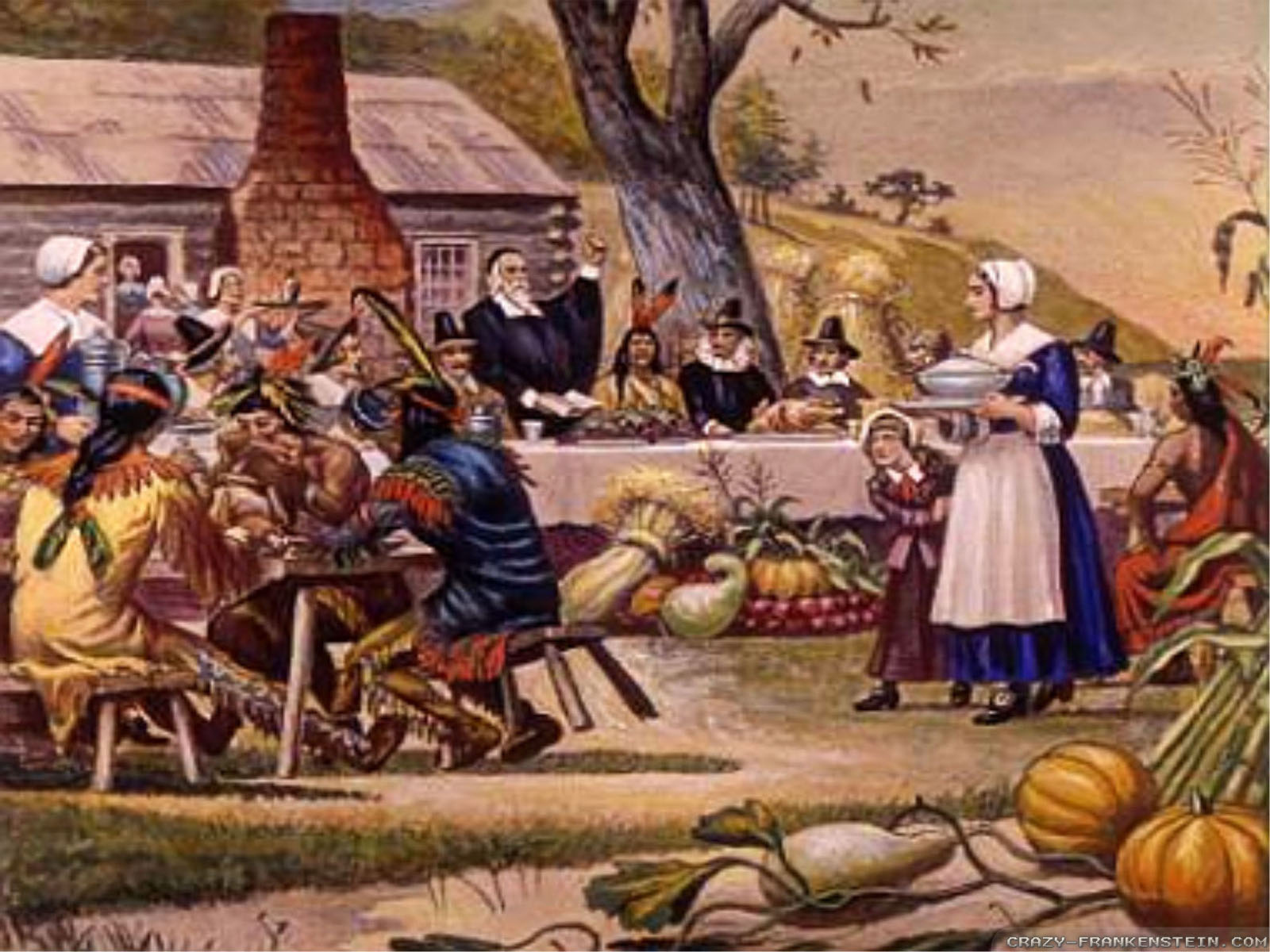
What is the history of Thanksgiving?
Was it a grateful celebration? Or was it something entirely different?
Many holidays we celebrate have great history. Some holidays have a distorted history. I’m hoping to pass along the real stories of how America was settled and the how the First Thanksgiving was celebrated.
When did the Thanksgiving Holiday start?
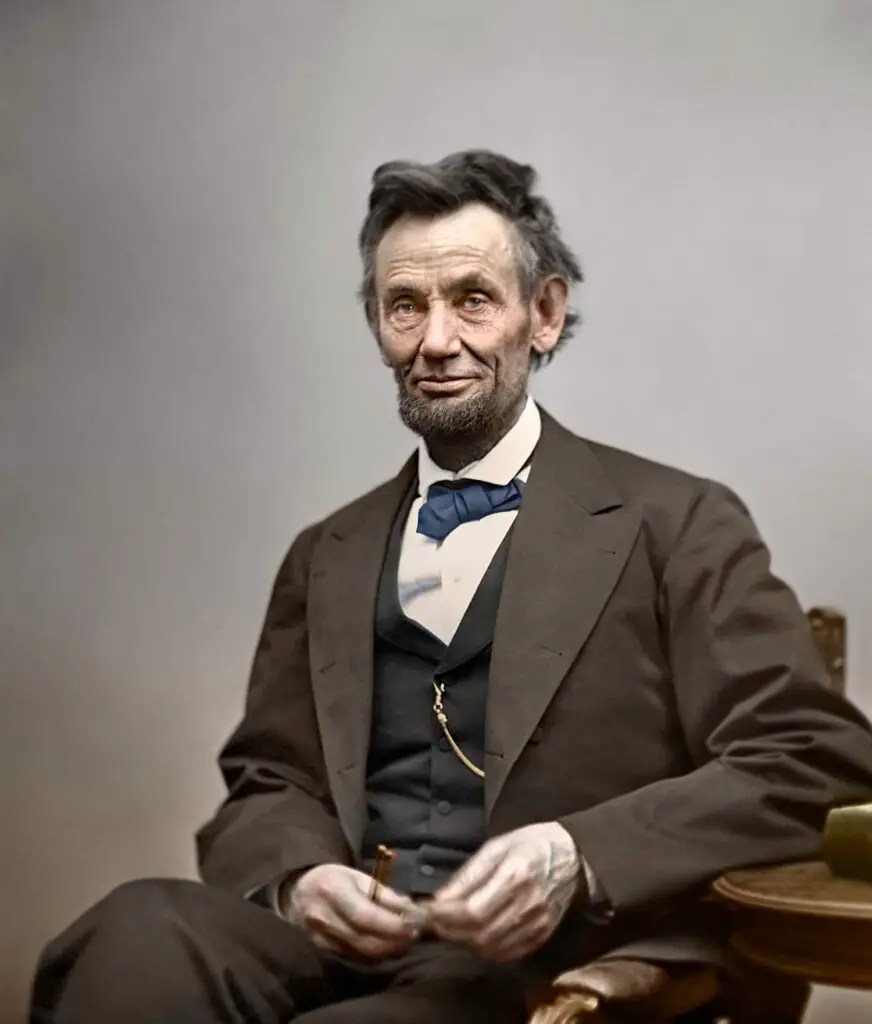
The formation of Thanksgiving as an official, United States holiday, did not happen until November 1863, during the Civil War. President Abraham Lincoln officially established the holiday to improve relations between northern and southern states.
“It was propaganda,” it is explained. “The proclamation of the holiday was aimed to build an event of community. The goal was to create a deeper narrative about community building. It was about coming together in shared brotherhood and unity.”
The Thanksgiving of today is not an absolute factual event. There were many “thanksgiving” meals across found in North America, European cultures, and other cultures of the world.
In ancient times, Egyptians, Greeks, and Romans paid tribute to their gods for a good harvest. Our Thanksgiving also bears a resemblance to a Jewish harvest festival of Sukkot. It was simply a meal shared with friends and family after harvest. Sometimes there was a celebration of the harvest.
Who were the first settlers?
It was 1498. John Cabot worked for King Henry VII of England. Six years had passed since Columbus landed in the West Indies. Cabot was an Italian sailor who sailed into North American waters. He may have explored the Maine coast. However, there is no concrete evidence of it.
A century after Cabot’s voyage, several European ships briefly visited the area. Some of them put ashore to make repairs. Others processed fish catches.
The Plymouth Company established the first settlement at Popham, Maine, in 1607. This was the same year as the settlement at Jamestown, Virginia. The Popham colony didn’t survive the harsh Maine winters. Therefore, Jamestown, Virginia, enjoys the distinction of being regarded as America’s first permanent settlement.

Florida, Maine, Texas, and Virginia have each claimed sites of the First Thanksgiving in North America.
Europeans had been living and working in North America for many years prior to the Pilgrims.
It is said that the First Thanksgiving occurred on May 27, 1578, in Newfoundland Canada, and was held by Europeans. However, some believe the colonists of the Popham Colony in Maine may have conducted the first Thanksgiving service in 1607.
Fishing vessels with Basque, English, Portuguese, French, Dutch and Spanish crews were making seasonal expeditions. Basque vessels had been fishing cod shoals off Newfoundland’s coasts since the beginning of the 16th century. Their crews used the natural harbor at Placentia. French fishermen also began to use the area. The Pilgrims were not first on the land.
What is a “pilgrim?”
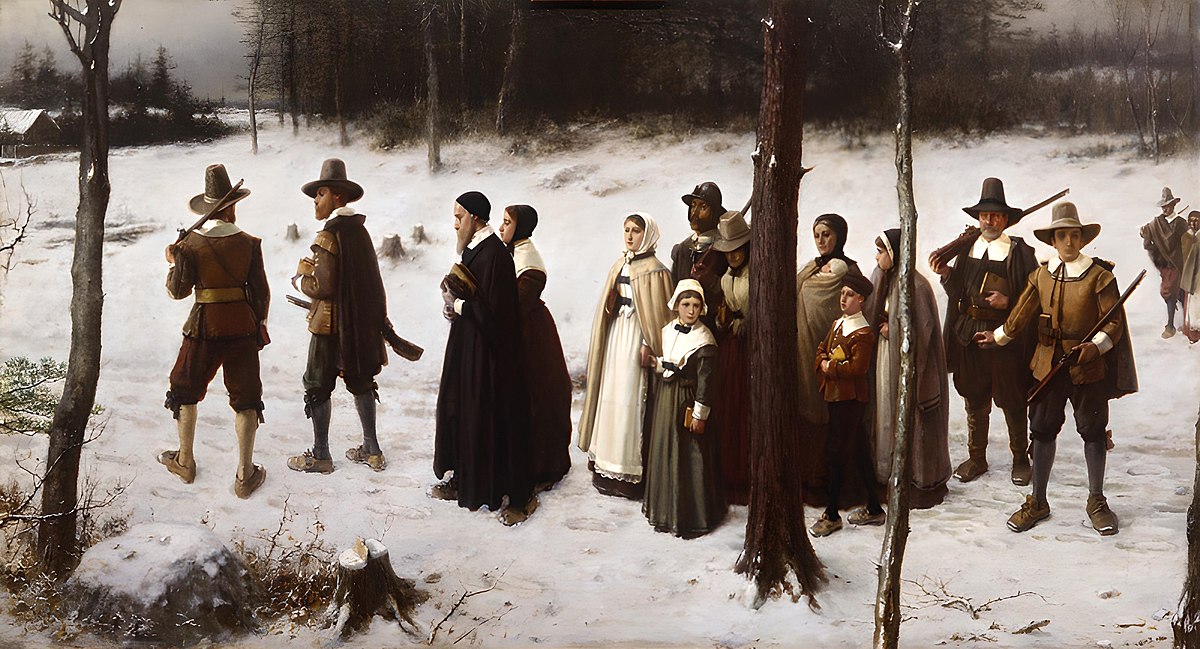
By definition, a Pilgrim is one who searches for religious freedom. By nature they are not explorers. The Pilgrims were primarily Puritan. Consequently, they were not exactly friends of the English church. Puritans held strong Calvinist Protestant beliefs. They aimed to completely eradicate traces of the Catholic Church and the English or Anglican Church. They were out to spread their beliefs to everyone, especially the heathens of North America.
The Mayflower set sail on 16th of September 1620, from Plymouth, UK, for a voyage to America. But its history and story start long before that. Its passengers were in search of a new life. Some sought religious freedom. Others were looking for a fresh start in a different land. Some dreamed of great wealth.
Many Pilgrims were seeking a place to freely practice their faith. Others were lured by the promise of land ownership and prosperity in the “New World.” Some were desperate to leave due to persecution.
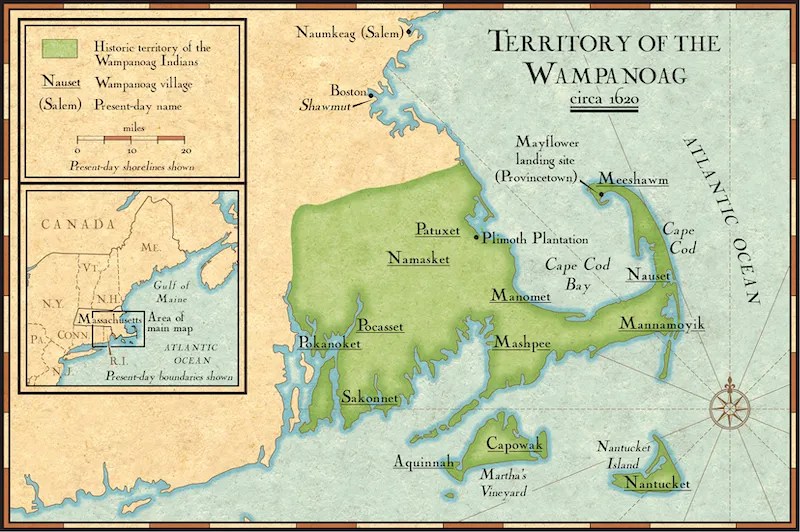
Mayflower finally lands, but not where they wanted to go.
When the Mayflower landed after along trip of 66 days, November 9, 1620, only 53 of the 102 passengers survived. They did not land at Plymouth Rock. The English really intended to land south of the Hudson River, somewhere in New Jersey, a warmer harbor. However, a storm blew the ship off-course. It put them ashore off Cape Cod harbor, Maine, in a dark and very cold winter.
The Pilgrims first had to find shelters for their winter ordeal, and find water and food. It is recorded that some stayed in abandoned Native American’s lodges. Throughout the first winter, many Pilgrims suffered from weather exposure, scurvy, and outbreaks of a contagious disease.
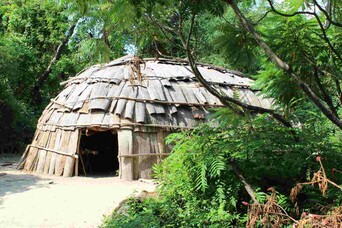
Unfortunately, the Pilgrims had no knowledge of the local wildlife. Even if they did, they lacked the knowledge of how to capture it, nor the tools to hunt. They had left in haste, and did not pack well. Nor were they aware of what was needed.
(Half of the landing party died that winter. If the Pilgrims were not the very first settlers, why was there no knowledge of what to expect? Some say it was due to the hasty departure to avoid persecution in England.)

The Mayflower sailed back to England in the spring of 1621. Despite the hardships of the winter, none of the Pilgrims returned with the ship. The Mayflower resumed transporting cargo, never returning to Plymouth. By 1624, the Mayflower’s sailing life was over and the ship was described as being “in ruins.”
It was April of 1621 when Samoset, a Native Abenaki Indian, entered the village. Samoset, who spoke English, greeted them by saying “Welcome!”
(Samoset had learned English from interactions with an English fishing camp established in the harbor. Samoset was a lesser chief of the Abenaki people. He often sailed with Captain Dermer, a regular explorer of the region.)
Who was Squanto?
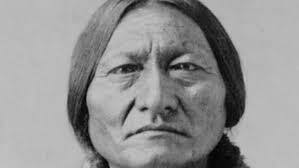
Several days later after Samoset welcomed the Pilgrims, Samoset returned with Squanto, a member of the Pawtuxet tribe. (Squanto was living with the Wampanoag tribe as his entire tribe had been wiped out due to an epidemic.)
The story is true that the early settlers could not have survived without the aid of Squanto and the Wampanoag tribe. As said, they were ill-prepared to fend for themselves. The Wampanoag tribe taught the Pilgrims how to hunt for food in the winter.
(Did you ever wonder how Squanto could communicate with the Pilgrims? An Englishman kidnapped him in 1614. Along with two dozen others, and he was taken to Spain to be sold into slavery.
Squanto escaped captivity, possibly with the help of Catholic friars. He made it back to America, only to discover he was the only survivor of his village. An epidemic had swept across the New England area while he was gone.
Samoset could also speak English. Many years earlier, many Native Americans had been kidnapped and to be sold in England. Samoset was also one of those kidnapped.)
(Interesting that both men were able to escape England and return to America. I was unaware of kidnapping of Native Americans many years before the Pilgrims. Weren’t we taught that it was the Pilgrims as the very first settlers?)
Squanto helped the settlers, in the Spring, by teaching them how to plant corn and other vegetables. With the first harvest, the settlers decided to have a thanksgiving feast in celebration of a good harvest.
Squanto also showed the Pilgrims how to extract sap from Maple trees. He taught them how to catch fish in the rivers. Squanto, also, pointed out which poisonous plants to avoid. He helped forge an alliance between the Wampanoag tribe and the Pilgrims.
Unfortunately the time Squanto works with the Pilgrims is short as he dies from a disease two years later.
(Years later, 1676, the English sold many Wampanoag men into slavery in Bermuda, the West Indies, or on plantations and farms run by colonists in New England. It was not unusual to kidnap Natives and sell them into slavery.)
Very tough times.
The Wampanoag people, the “People of the First Light,” played a crucial role. They saved the Pilgrims from starvation and death during the harsh winter of 1620–21.
The first Pilgrim homes were most likely abandoned Native American villages. Here many also caught the diseases that killed the original inhabitants.
Diseases such as smallpox, bubonic plague, and chickenpox were introduced by the European fishermen. Measles, diphtheria, influenza, malaria, scarlet fever, typhoid, tuberculosis, and pertussis were also introduced.
These were diseases to which Native people bore no natural immunity. Prior to the arrival of European colonist/ fisherman, Native people were plague free. These European diseases killed many many Native Americans.
It was a very tough living those early years. Children worked alongside their parents. Many suffered from the great burdens of creating a village. It was not unusual for a child to die due to hard labor, disease, or the cold.
The Pilgrim’s dream was to bring the Gospel of the kingdom of Christ to remote parts of the world. But they were ill prepared to do that.
The first Thanksgiving was not the first.
There were many Thanksgiving services in America long before the Pilgrim’s celebration of 1621. The first Thanksgiving, with the Wampanoag tribe, was a non-religious feast, that took place over three days. Games were played. Alcohol was consumed. Indians were present. But they all did not eat together.
Most of the dishes were likely prepared using traditional Native American spices and cooking methods.
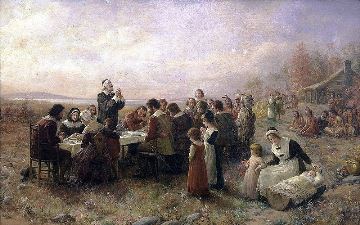
In 1623, the Pilgrims at Plymouth Plantation, Mass. held another Thanksgiving celebration. The colonists were praying and fasting for rain as a drought had consumed the area. The rains did come a few days later. And the Dutch supply ship arrived.
It was June 30, 1623, when the Dutch supply ship arrived. The colonists held a day of Thanksgiving and prayer. This festival seems to be the start of Thanksgiving becoming a religious and social event for the Pilgrims.
Europeans brought diseases to the Native Americans.

Prior to European arrival, America’s Indigenous nations did not experience illnesses attributed to livestock, overcrowding, or poor hygiene or sanitation.
“Residents of northern Europe and England rarely bathed. They believed it was unhealthy. They also rarely removed all of their clothing at one time. They thought it was immodest.”
“The Pilgrims smelled bad to the Indians. Squanto ‘tried, without success, to teach them to bathe,’ according to Feenie Ziner, Squanto’s biographer.”
In fact, three years before the pilgrims landed, English and French fisherman transmitted diseases to tribes. They came ashore to find fresh water and firewood. They also captured Native Americans for the slave trade. And they left behind great illness for Native Americans.
It was not easy. Tens of thousands of Native Americans and Europeans died during this time from plague. (This was the time of Squanto held captive in Europe). The plague wiped out a vast majority of the inhabitants of coastal New England. Within 3 years, 90 to 96 percent of them were gone. This was a death rate unknown to man.Those living in the area perished from conflict, conquest, and diseases. (When Squanto returned to American, his tribe was gone.)
Those who did survive left their communities to join others, bringing the illnesses along with them. This caused many Native Americans to perish, even though they had not encountered Europeans.
Religion and exploration and conquer.
Throughout history, religion has served as a justification, and for the English Separatists, it was no different. They believed the wide-spread death and devastation of Native Americans due to disease was divine provenience. They thought God willed them to take over the land.
“By the time the Native populations of New England had replenished themselves to some degree, as so many had died from plagues, it was too late. Native Indians could not expel the intruders.
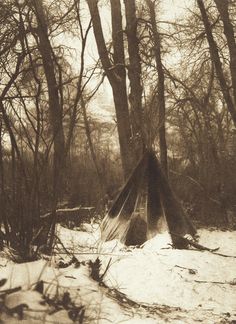
Colonists occupied lands cleared by Indian farmers who had vanished. As a result, colonization proceeded much more quickly. Native Americans endured devastating physical assaults, particularly from European plagues. If disease and plagues had not happened, the colonization of America would have been quite different.
(Interesting how great illness can shape history. The Pilgrims easily settled in their first years with little conflict of natives. (The local Native American tribes were generous and welcoming.) The widespread death of the Native Americans caused this lack of conflict. Introduced European diseases were responsible for many, many, many deaths.)
It was a very tough time of conquer for the Native American Indian. Colonization brought much death to the natives. It was an awful price to pay for the Pilgrims goal of religious freedom and wealth.
Foods of the first Thanksgiving:
It is noted that the Indian tribe, Wampanoag, arrived with five deer at the first Thanksgiving. The deer were roasted on an smoldering fire pit. Perhaps some of the meat was used for a stew.
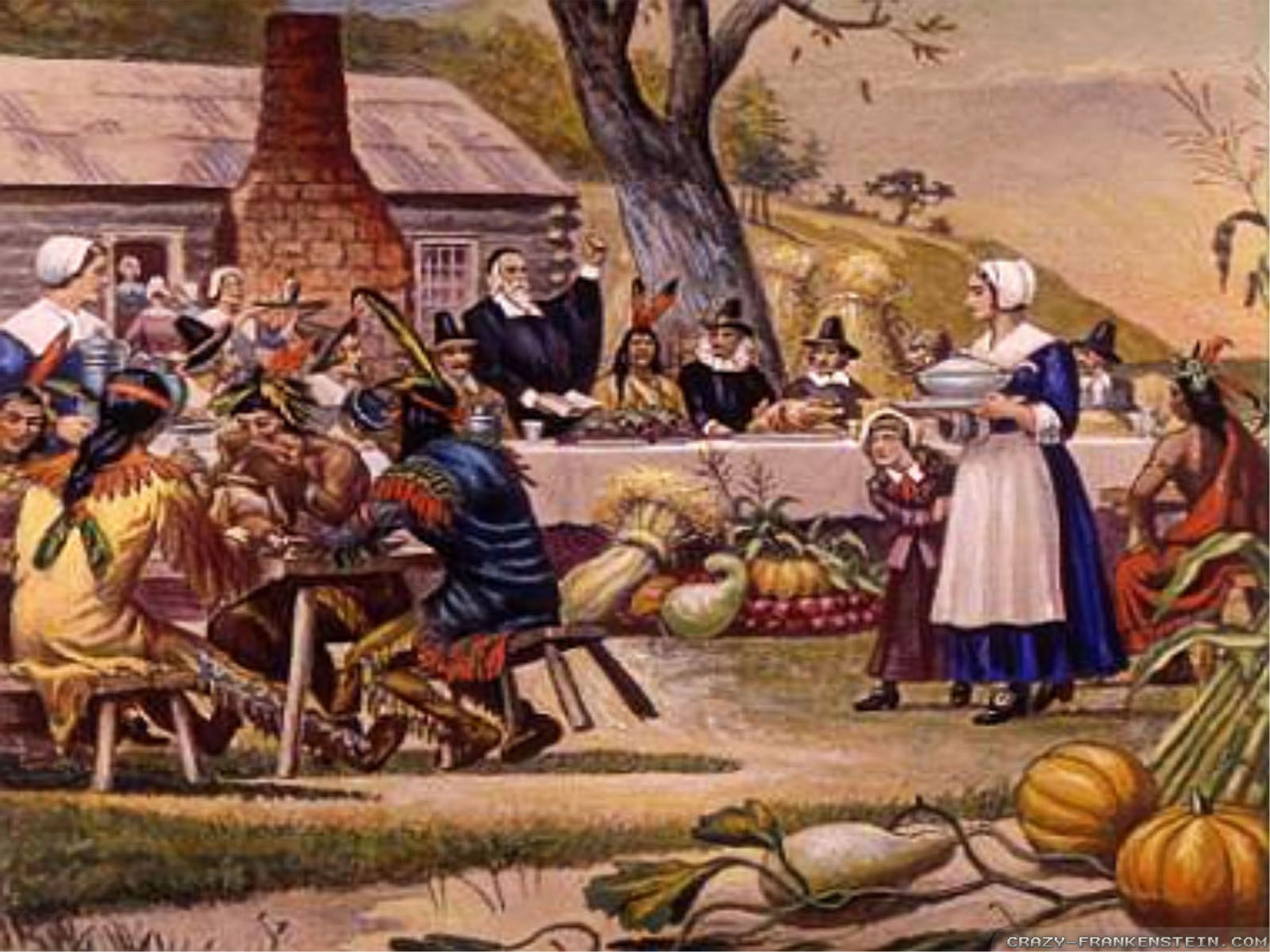
Local vegetables were onions, beans, lettuce, spinach, cabbage, carrots, and perhaps peas. Corn was removed from the cob and made into corn meal. This corn meal was boiled and pounded into a corn mash, with a molasses sweetener.
Fruits included blueberries, plums, grapes, gooseberries, raspberries, and cranberries.
It is believed that much of the Thanksgiving meal consisted of seafood. Mussels, lobster, bass, clams, and oysters might have also been a part of the meal.
Potatoes had no place in the meal. It was the Spanish that introduced the potato to Europeans in 1570. Plant roots that were eaten included: Indian turnips, and groundnuts. (A “groundnut” is a variety of roots and tubers. It also includes leguminous crops similar to peanuts. These mature and ripen underground.)
Pumpkin was not served due to a lack of butter and wheat flour. And the settlers had yet to construct an oven for baking. Some say that settlers hallowed out the pumpkin. They may have filled the shell with milk, honey, and spices to make a custard. Then, they roasted the pumpkin whole in hot ashes.
If the harvest was good, there was plenty to eat.
It is said that this “first Thanksgiving meal” the colonists were outnumbered by Native Americans two to one. The Native Americans knew this type of feast well. It was central to their regular spiritual practices. They held these feasts to give thanks for a natural bounty. (Native Americans did not eat at the same table as the settlers.)
Today’s Thanksgiving:
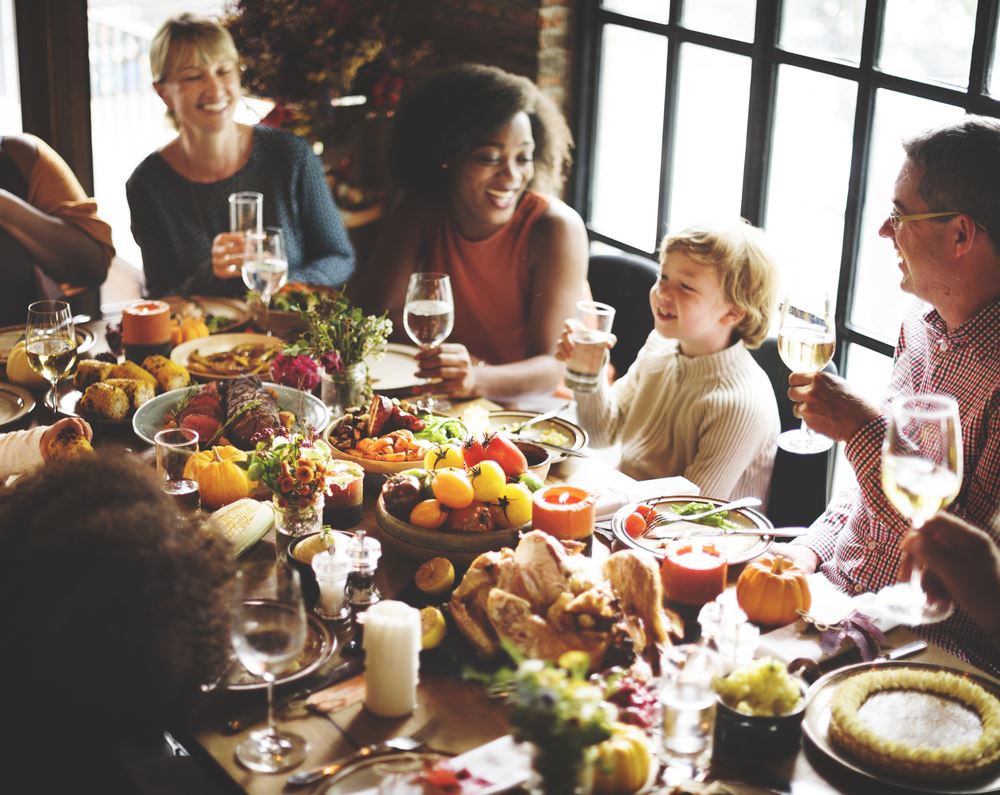
Today, Thanksgiving is a time for families to gather together. Many churches offer special services. We all need to thank Native Americans for the opportunity to celebrate. Without their guidance, early Pilgrims would not have made it.
For some scholars there is still an argument as to whether the Pilgrims really had the first Thanksgiving. History has recorded other Thanksgiving meals among European (Spanish) settlers in North American before the Pilgrims celebration.
Macy’s Thanksgiving Parade, a part of today’s Thanksgiving celebration.
What would Thanksgiving be like in the 20th and 21st century without the Annual Macy’s Thanksgiving Day Parade?
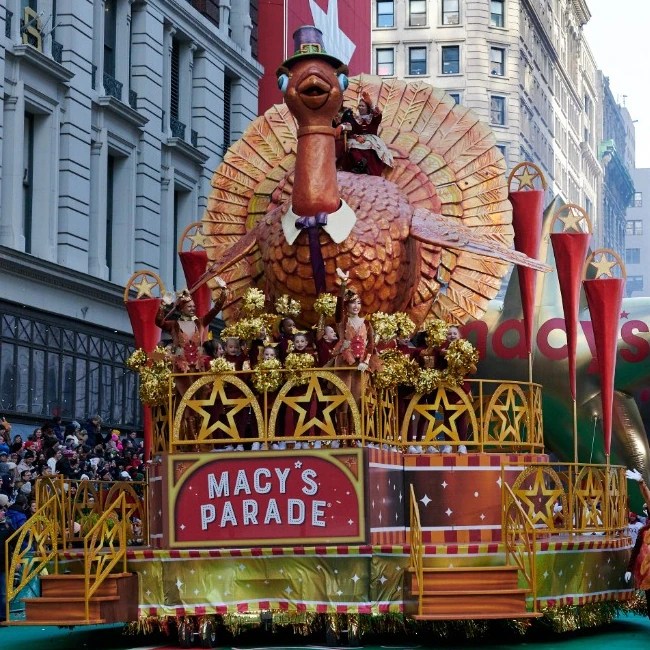
Parades have always been a part of a citys’ or nations’ celebration. Macy’s Thanksgiving parade started in 1924. It is the largest and most famous, attracting 2-3 million spectators along it’s 2.5 mile route. It also draws an enormous television audience. We all have our favorite bands, performers, floats, and giant balloons each year.
Thanksgiving Controversy.
A Thanksgiving meal holds a long tradition. We all look forward to the celebration of, perhaps, turkey and all the trimmings. We volunteer in food banks so that many can also enjoy the meal. Many families take days to prepare for this meal. Pumpkin pie is a tradition for many. We forget how this holiday came to be. We may not know of who sacrificed so much that today we can give Thanks.
Why don’t we thank Native Americans for their role in our History?
Here in America, Native Americans take issue with the Pilgrim story. It masks the long and bloody history of conflict between Native Indian tribes and the European settlers. This conflict resulted in tens of thousands deaths from both sides.
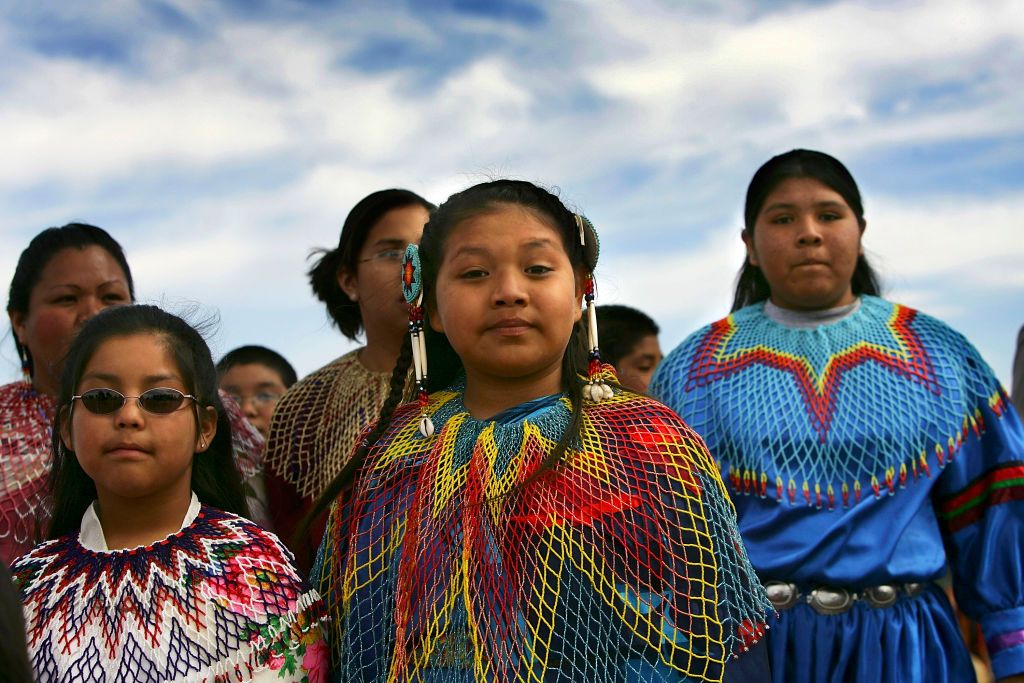
We need to be aware of the needs of Native Americans today. We have forgotten them. Use Thanksgiving to pray for them, and consider a donation to a local tribe. Every state has a local tribe. They are there.
We need to remember that Native Americans helped us celebrate a “first” Thanksgiving. We also need to teach this to our children. It was a very difficult time for an ill-prepared group of Pilgrims and Europeans.
The Pilgrims intended to convert the “natives” to their religion. They had no regard for what the Native Americans had been practicing.
It was all about the Puritan way as the ONLY way to God. Today I think we are aware that there are many religions that pay homage to God, but in different ways. We are not to judge who is the better way.
What to share with our children today:
Teach our children that a Thanksgiving meal is a special celebration for everyone’s family.
Teach our children how much Native Americans gave of themselves, their cultures, their homes, their traditions in the conquest of North America.
Teach them that the Native Americans really suffered for all their help in the conquest of settling North America.
Teach our children to respect others and their beliefs. Let’s also give thanks for the help of Native Americans in settling North America.
And help your family to remember others at Thanksgiving.
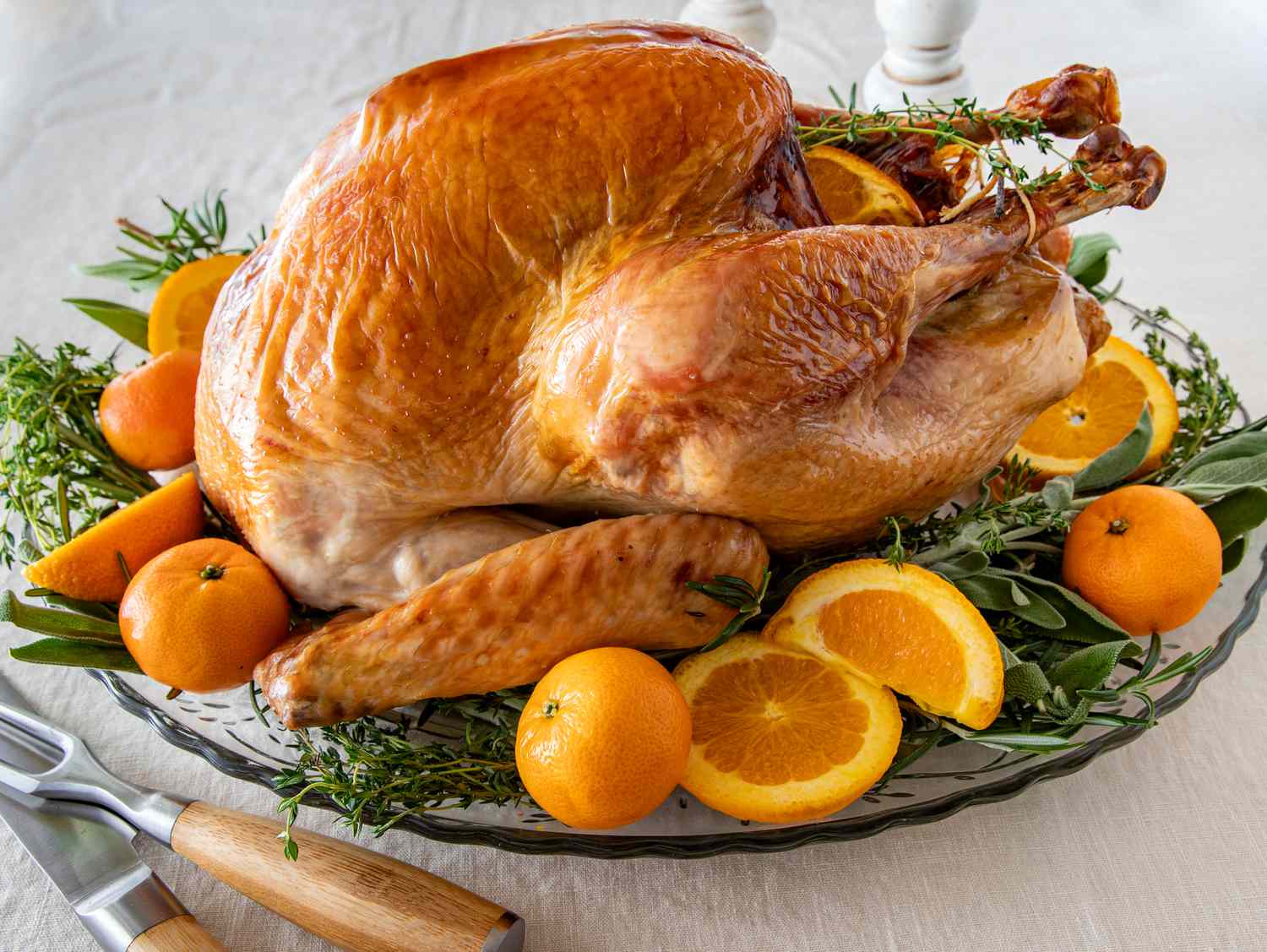
Happy Thanksgiving!
This special occasion unites families and friends. We create cherished memories as we gather around the table to enjoy a feast filled with delicious dishes.
It’s a time for gratitude, reflection, and celebrating the abundance in our lives, while also remembering those less fortunate. It’s a time to think about how this holiday began.
As we share laughter and stories, let us appreciate the meaningful connections we have and express our heartfelt thanks for the blessings that enrich our lives.
References:
https://https://www.potawatomi.org/blog/2020/11/25/the-true-dark-history-of-thanksgiving/
https://www.history.com/topics/thanksgiving/first-thanksgiving-meal
 Mary Jessen: Wellness Makes Cents
Leave a comment